本文介绍了基于人工智能 (AI) 的气举井、自然流井和注水井完整性监测的概念验证 (PoC)。人工智能模型原型的构建是为了根据时间序列传感器数据检测环空泄漏作为与事件相关的异常。气举井和自然流井的人工智能模型达到了足够的性能水平,至少检测到 75% 的历史事件,并且每口井每月误报率低于 1 次。
问题陈述
在勘探和生产行业,历史上的油井完整性事件很少见,因为系统的设计尽可能坚固以防止发生事故。在作者的研究中,所考虑的资产在 13 年的油井作业中仅发生过 12 起历史井眼泄漏事件。
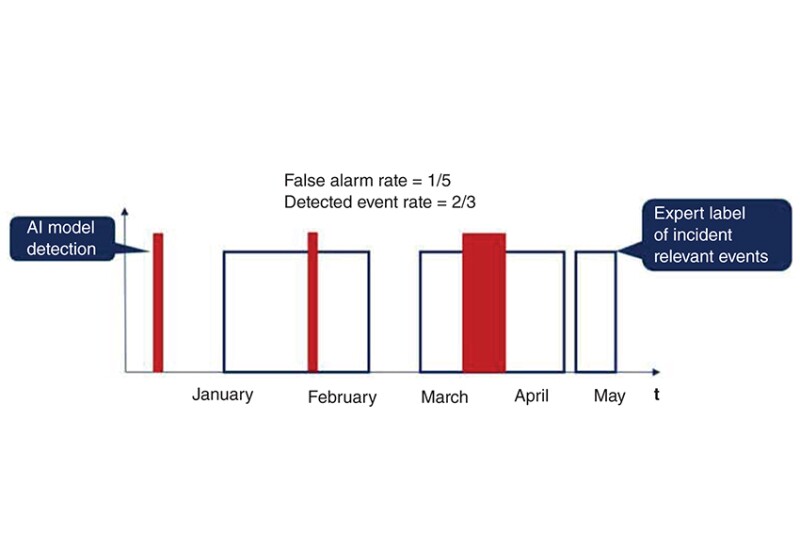
本文介绍了基于人工智能 (AI) 的气举井、自然流井和注水井完整性监测的概念验证 (PoC)。人工智能模型原型的构建是为了根据时间序列传感器数据检测环空泄漏作为与事件相关的异常。气举井和自然流井的人工智能模型达到了足够的性能水平,至少检测到 75% 的历史事件,并且每口井每月误报率低于 1 次。
在勘探和生产行业,历史上的油井完整性事件很少见,因为系统的设计尽可能坚固以防止发生事故。在作者的研究中,所考虑的资产在 13 年的油井作业中仅发生过 12 起历史井眼泄漏事件。
This paper presents the proof of concept (PoC) of artificial intelligence (AI)-based well-integrity monitoring for gas-lift, natural-flow, and water-injector wells. AI-model prototypes were built to detect annulus leakage as incident-relevant anomalies from time-series sensor data. The AI models for gas-lift and natural-flow wells achieved a sufficient level of performance, with a minimum of 75% of historical events detected and less than one false positive per month per well.
In the exploration and production industry, historical well-integrity events are rare because systems are designed as robustly as possible to prevent incidents. For the authors’ study, there were only 12 historical wellbore leakage incidents spanning 13 years of well operations in the assets considered.