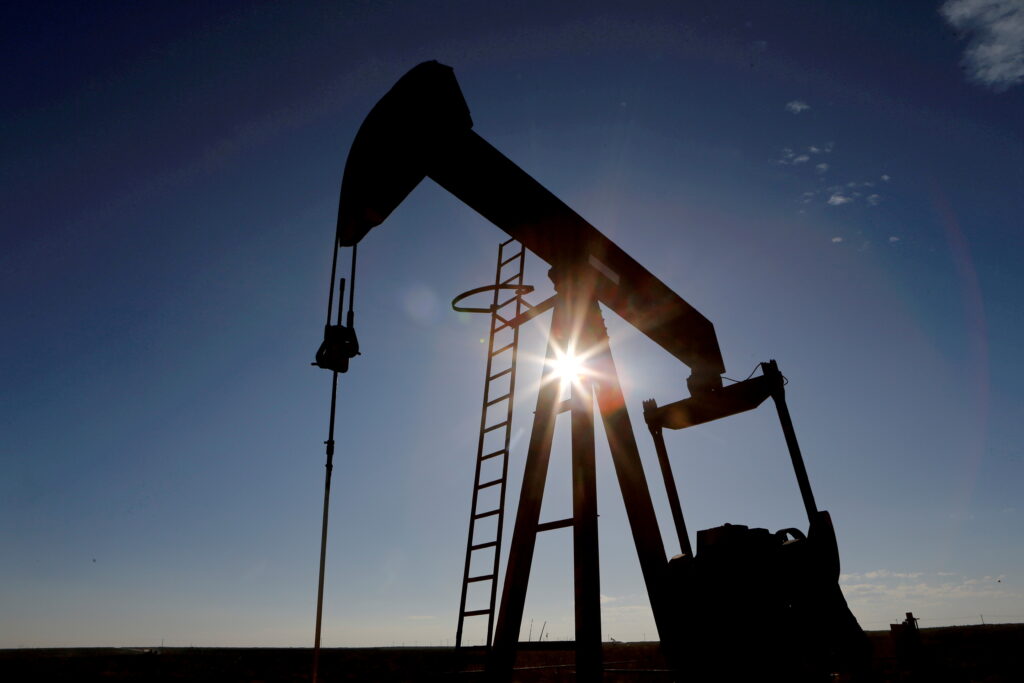
Non-OPEC+ supply is growing at a faster pace than previously forecast and is being led by record U.S. crude oil production, which continued to soar despite a flat or falling rig count compared to this time last year.
OPEC+ and its leader, Saudi Arabia, face the same oil dilemma – how to counter surging U.S. production and prevent it from unraveling the efforts of the alliance to prop up prices.
Record-high U.S. oil production is a “huge problem” for OPEC+, Paul Sankey at Sankey Research told CNBC after last week’s OPEC+ meeting.
The solution for Saudi Arabia could be to just flush the soaring non-OPEC+ output out by flooding the market with crude and thus sinking oil prices to levels below the U.S. profitability threshold, Sankey said.
“We’ve more or less been saying potentially Saudi needs to just flush this thing out,” he told CNBC.
The Kingdom is believed to have a production capacity of around 11.5 million bpd, and it’s currently producing around 9 million bpd. So Saudi Arabia could ramp up its oil output by around 2.5 million bpd – if it decided to – within six months, according to Sankey.
The Saudis flooding the market with oil wouldn’t be all that surprising – they did so in 2014 and again in the price war in the early Covid days in 2020 when WTI oil prices went negative.
Soaring U.S. oil production is becoming a “real problem for OPEC,” Sankey told CNBC.
U.S. crude oil production hit a new monthly record of 13.236 million bpd in September, according to the latest data from the EIA released on Thursday.
“The growth has not just been a Permian story. We’re seeing many shale basins that were flattish experiencing a revival,” Francisco Blanch, Head of Global Commodities and Derivatives Research at BofA, said on a call to discuss the bank’s energy outlook, as quoted by Reuters.
BofA Global Research said last week in its 2024 outlook that “Recession, faster-than-expected US shale growth, and lack of OPEC+ cohesion are downside risks to oil prices.”
Other non-OPEC+ producers are also ramping up production – including Guyana, Canada, and Brazil.
Brazil was invited to join the OPEC+ alliance as of January 2024, but the biggest oil producer in South America will not have any quota and will not take part in oil production cuts.
The lack of a unanimous group-wide cut with all members contributing is a concern about the OPEC+ unity, analysts say.
“With the cuts only being supported by a handful of producers and with no additional cuts from Saudi Arabia, the failure to secure a group-wide agreement does not bode well for the group’s unity going forward – especially if demand continues to slow, forcing more unpopular and economically challenging decisions,” Ole Hansen, Head of Commodity Strategy, at Saxo Bank, wrote in a weekly note on Friday.
By Tsvetana Paraskova for Oilprice.com