Calgary-based Cenovus Energy said on 22 August it will acquire neighboring heavy oil producer MEG Energy in a cash-and-stock deal valued at $5.68 billion (CAD 7.9 billion), including the assumption of debt. Terms of the transaction include 75% in cash and 25% in Cenovus common shares.
The acquisition adds about 110,000 B/D from the Athabasca oil sands to Cenovus’ portfolio, lifting pro forma production to more than 720,000 B/D from steam-assisted gravity drainage (SAGD) projects and further extending its lead as Canada’s largest SAGD producer.
“This is a very significant transaction for Cenovus. In acquiring MEG, we bring together two leading SAGD producers, strengthening our long-life portfolio of low-cost oil sands assets,” CEO Jon McKenzie said on a conference call announcing the deal.
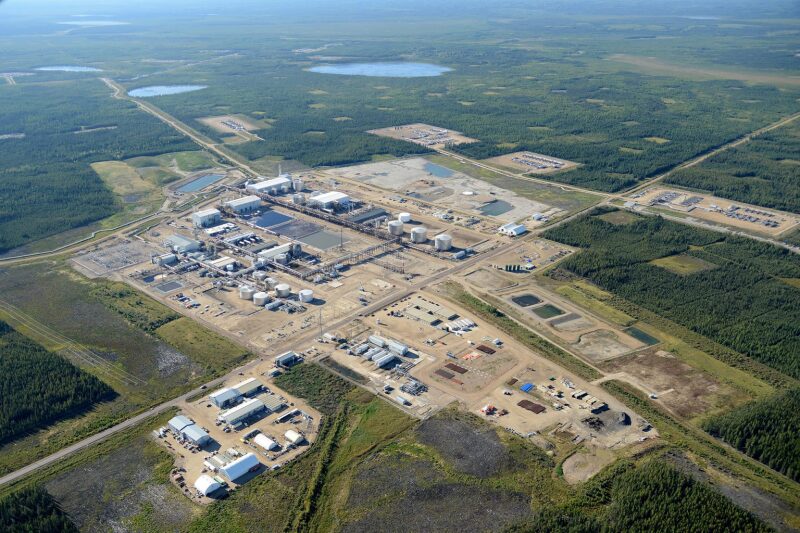
The deal gives Cenovus contiguous assets about 150 km south of Fort McMurray, Alberta, which it said in an investor presentation “perfectly complement” its Christina Lake holdings and will help advance its goal of reaching 800,000 B/D.
Cenovus plans to spend about $289 million above MEG’s proposed capital plan for 2026–2028 to capture new efficiencies and raise production at the asset to about 150,000 B/D by 2028, more than 20,000 B/D above MEG’s prior guidance. The company expects incremental spending will generate more than $108 million in annual savings, rising to more than $289 million per year by 2028.
“We know these assets well, and we have very high confidence in our ability to achieve the synergies that we've identified with the potential for even more to come as we look at our long-term development options,” McKenzie told investors.
The CEO added that the cost synergies will be realized through staffing, procurement, commercial decisions, and reduced financing costs, totaling about $86.8 million in savings next year. Development and operating improvements are expected to add another $21.7 million in the near term and more than $202 million in the long run.
Other cost efficiencies will come from applying Cenovus’ development model, which will focus on extending lateral lengths from 1,300 to about 2,000 m and doubling average well spacing from MEG’s 50 to 100 m. This is intended to shrink the footprint of future development sites from MEG’s typical two surface pads for every 29 well pairs to one pad for eight well pairs. Cenovus said the result will enable it to pump the same volumes of heavy oil with significantly less capital.
The company also plans to redevelop MEG’s producing sections by drilling new wells into already-heated reservoirs, recovering more oil without adding steam capacity.
McKenzie said such wells deliver production at about one-fifth the cost of traditional SAGD pairs and that Cenovus already drills about 100 of these wells annually across its portfolio, contributing roughly 100,000 B/D of output. He added that Cenovus has identified more than 250 potential redevelopment locations within MEG’s Christina Lake asset.
Cenovus is also looking to add more steam capacity to MEG’s Christina Lake asset which it expects will support 30,000 B/D in added production. In the near term, the company will apply its proprietary steam-monitoring technology to boost output there by about 15,000 B/D.
The company also pointed to new opportunities from the regulatory buffer of 100 m that exists on either side of the two companies’ adjacent leases. With this barrier removed, Cenovus said it will optimize pad orientation and gain access to previously stranded well locations.
Cenovus added that the deal also unlocks areas that were blocked behind MEG’s footprint, areas that would have needed costly long-distance pipelines and would have likely stayed untapped for decades.
In striking the deal, Cenovus beat out rival Canadian producer Strathcona, which initiated an offer to buyout MEG in May. Cenovus said it expects the deal to close in the fourth quarter pending regulatory approvals.
The last major acquisition by Cenovus was its $2.9 billion purchase of Husky Energy, announced in 2020.