World Oil
(Bloomberg) – The heads of Saudi Aramco and Exxon Mobil Corp. took to the stage at a major industry event Monday to voice support for the global transition to cleaner forms of energy, but one in which oil continues to play a major role for decades to come.
Source: World Oil
Both chief executive officers touted capturing and storing carbon as one of the best way to significantly reduce emissions from burning fossil fuels. They also stated that cutting oil usage too quickly would be dangerous, given the growing global demand for energy.
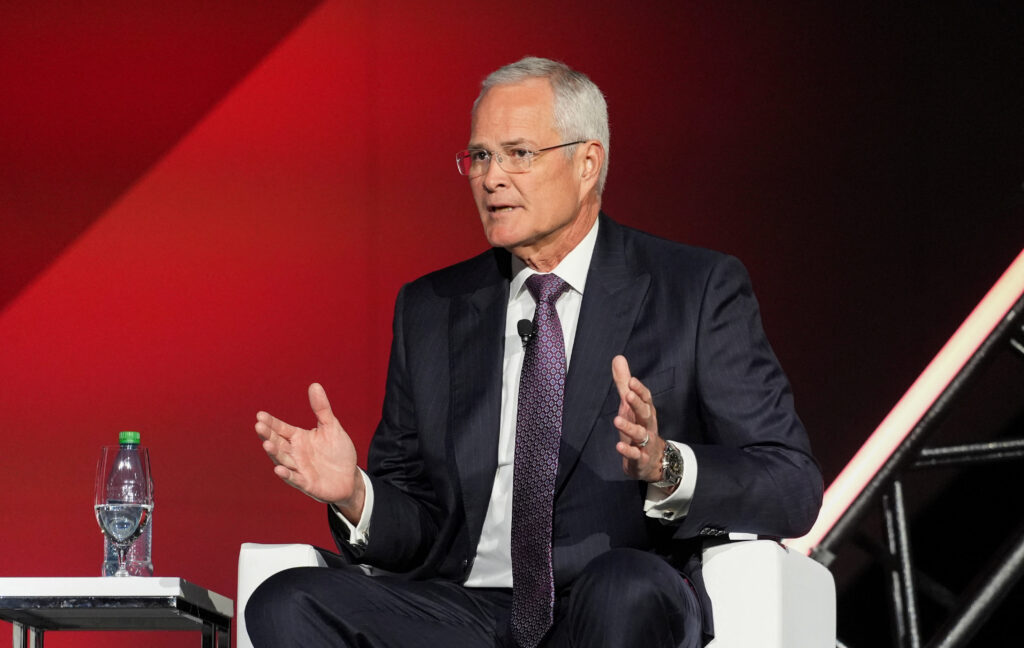
“There seems to be wishful thinking that we’re going to flip a switch and we’ll go from where we’re at today to where it will be tomorrow,” Exxon Chief Executive Officer Darren Woods said during a panel discussion at the World Petroleum Congress in Calgary. “No matter where demand gets to, if we don’t maintain some level of investment in the industry, you end up running short of supply, which leads to high prices.”
After a tough spell at the height of pandemic, when demand and profits collapsed, the industry has bounced back amid higher oil and gas prices, and landed on a common approach: Yes, climate change is real and carbon emissions must be cut, but the oil industry is still essential in meeting world energy demand, and it can do that while engineering a solution to aggressively slash pollution.
Both Woods and Saudi Aramco CEO Amin Nasser were bullish on the prospects for oil demand and disdainful of other forecasts for how quickly the world will wean itself off of crude.
Nasser said he expects record usage of 103 – 104 MMbpd in the second half of this year, with demand climbing to 110 MMbpd by 2030. That puts the onus on the industry to continue developing new sources of production, rather than paring back output as environmentalists want.
The lull in exploration and production spending after the pandemic-induced retreat in energy demand in 2020 has been blamed in part for the soaring oil and natural gas prices that shook the world last year after Russia’s invasion of Ukraine.
“We need to invest,” Nasser told the conference. “Otherwise in the mid to long term, we will have another crisis, and we will go backwards in terms of using more and more coal and other cheap products available today. And all these decarbonization efforts will go down the drain.”
Saudi Energy Minister Prince Abdulaziz bin Salman said the kingdom wants to support the transition, but politicians must be honest about the challenges ahead, and the risks if the shift isn’t managed well. Prince Abdulaziz mused that he would like a session at the next World Petroleum Congress, scheduled to be held in Riyadh in 2026, that would discuss how Saudi Arabia managed to transition without creating “havoc” in its economy.
Echoing those comments, Omar Farouk Ibrahim, secretary general of the African Petroleum Producers Association, said the economies of the nations he represents shouldn’t be jeopardized by the transition.
“Given our peculiar situation in terms of socioeconomic development and the fact that the problems of climate change were caused not by us but by the economically advanced countries of the world using fossil fuels, calling us to join the same speedy train to net zero is unfair and punitive,” he said at a press conference.
Alberta Premier Danielle Smith, whose province is hosting the conference and holds the world’s third-largest crude reserves in its oil-sands deposits, said energy must remain affordable and reliable. She also provided what may be a summary of the view held by many conference participants.
“We are transitioning away from emissions,” Smith said, “we are not transitioning away from oil and natural gas.”

