As one of the final acts of his administration, US President Joe Biden announced an executive action to permanently ban future offshore oil and gas development on more than 625 million acres of US waters.
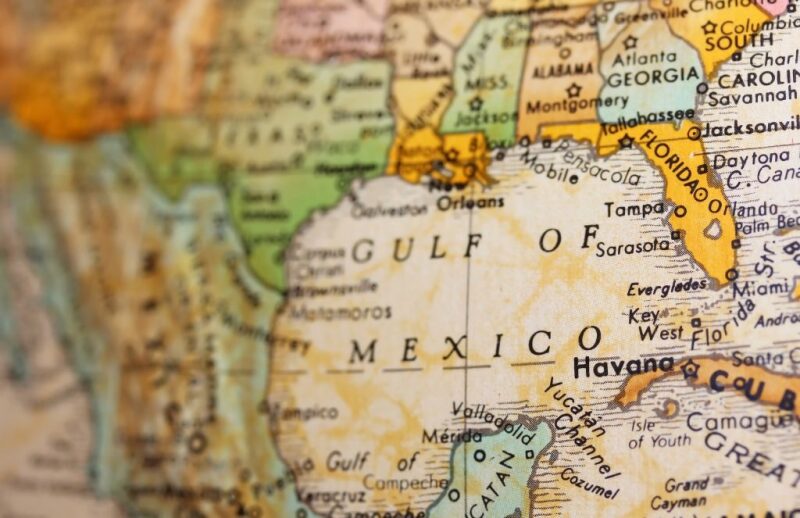
The president's statement cited the risks that oil and gas exploration would pose to coastal communities and businesses along the East and West Coasts of the US, the eastern Gulf of Mexico (GOM), and Alaska's Northern Bering Sea.
“As the climate crisis continues to threaten communities across the country and we are transitioning to a clean energy economy, now is the time to protect these coasts for our children and grandchildren," Biden said in a statement.
Biden’s act safeguards nearly 334 million acres within three distinct ocean and coastal regions: the Atlantic Outer Continental Shelf (OCS) from the Canadian border to the southern tip of Florida; the eastern GOM; the Pacific Coast along California, Oregon, and Washington; and the remaining portion of the Northern Bering Sea Climate Resilience Area offshore Alaska.
There are currently no active oil and natural gas leases in US federal waters off the eastern Atlantic Coast. Additionally, California has had a moratorium on issuing new leases in its state waters since 1969, and the last federal lease sale in the area was withdrawn in 1984. Various governors of these states have called for full protection of their coasts for decades.
The Northern Bering Sea Climate Resilience Area was established in 2016 and includes one of the largest marine mammal migrations in the world. Critics of oil and gas development have argued that exploration activities in these waters could disrupt the food security of native tribes in the area.
Biden's action invokes the 1953 OCS Lands Act, a law that gives presidential authority to withdraw federal waters from future oil and gas leasing and development. The law, however, does not give presidents explicit authority to revoke the action and place federal waters back into development.
US President-elect Donald Trump has already expressed his intention to reverse the action. But under the current interpretation of the law, he would require the US Congress to intervene and grant the authority to open federal waters for development once again.
While pointing to the Deepwater Horizon disaster in 2010 that killed 11 people and discharged millions of barrels of oil into the Gulf of Mexico, Biden said that “protecting America’s coasts and oceans is the right thing to do and will help communities and the economy to flourish for generations to come.”
Biden emphasized that the drilling ban enjoys bipartisan support, citing communities and elected officials from California to Florida. Despite the claim of broad approval, however, the decision has invited backlash from industry groups.
Mike Sommers, CEO of the American Petroleum Institute (API), issued a sharp rebuke, stating, “American voters sent a clear message in support of domestic energy development, and yet the current administration is using its final days in office to cement a record of doing everything possible to restrict it.”
Erik Milito, president of the National Ocean Industries Association, echoed the API leader, arguing that, “such moratoriums threaten our economic and national security by creating political barriers to our own resources. Even if there’s no immediate interest in some areas, it’s crucial for the federal government to maintain the flexibility to adapt its energy policy. … Blanket bans only serve to transfer energy production and economic opportunities abroad, inadvertently bolstering countries like Russia at the expense of US interests.”
While critics warn of potential economic consequences, the action is anticipated to have minimal immediate effect on the oil and gas industry.
Biden defended the decision, stating, “In balancing the many uses and benefits of America’s oceans, it is clear to me that the relatively minimal fossil fuel potential in the areas I am withdrawing do not justify the environmental, public health, and economic risks that would come from new leasing and drilling.”