脱碳

基于机器学习的协同优化框架提升二氧化碳封存和石油采收率

本文提出了一种采用多目标优化技术的新颖工作流程,以评估盐水层永久地质二氧化碳储存的压力管理方法的整合。

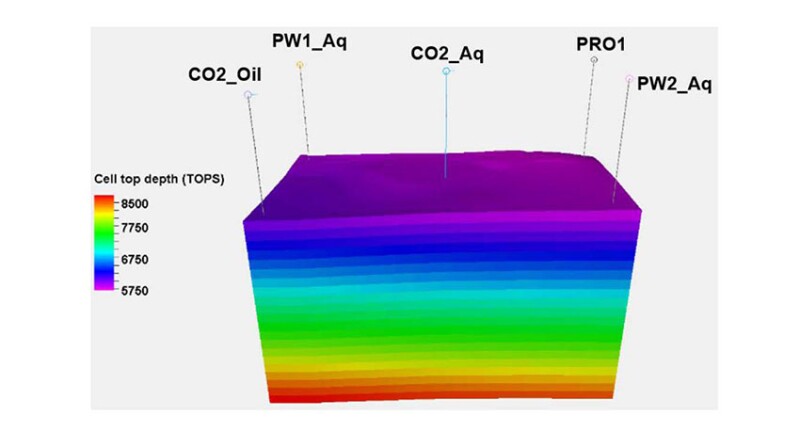
储层静态模型显示了单元顶部深度以及储层和含水层中的井分布。
来源:SPE 224150。

这项研究将二氧化碳强化采油 (EOR) 方法与地下封存策略相结合,实现二氧化碳永久封存,同时提高油藏的经济效益。该研究开发了一种采用多目标优化技术的新型工作流程,以评估在咸水层中实现二氧化碳永久地质封存的压力管理方法的整合效果

方法论

油藏模型描述。为配合本项目,我们采用非等温建模程序构建了一个代表墨西哥湾典型地层的均质油藏模型。该模型以页岩层为特征,将油藏与含水层分隔开来,从而可以同时评估二氧化碳提高采收率(EOR) 和二氧化碳封存。该模型采用 EOS-PVT E300 模拟器,在多组分体系下进行设计。

SPE徽标CMYK反式
成为 SPE 会员继续阅读
SPE 会员:请在页面顶部登录,即可访问此会员专属内容。如果您还不是会员,但觉得 JPT 内容很有价值,我们鼓励您加入 SPE 会员社区,获取完整访问权限。
原文链接/JPT
Decarbonization

ML-Based Co-Optimization Framework Improves CO₂ Sequestration and Oil Recovery

This paper presents a novel workflow with multiobjective optimization techniques to assess the integration of pressure-management methodologies for permanent geological carbon dioxide storage in saline aquifers.

Static model of the reservoir showing the cell top depthalong with the wells distribution in the reservoir and the aquifer..
Source: SPE 224150.

This work combines CO2-enhanced oil recovery (EOR) methods with subsurface containment strategies to permanently store CO2 while simultaneously increasing cost-effective oil production from reservoirs. The study develops a novel workflow with multiobjective optimization techniques to assess the integration of pressure-management methodologies for permanent geological CO2 storage in saline aquifers.

Methodology

Reservoir Model Description. A homogeneous reservoir model, representative of typical Gulf of Mexico formations, was constructed using a nonisothermal modeling code for the purpose of the project. The model features a shale layer separating an oil reservoir from an aquifer, allowing the assessment of simultaneous CO2-EOR and CO2 sequestration. The model was designed under a compositional multicomponent system using the EOS-PVT E300 simulator.

×
SPE_logo_CMYK_trans_sm.png
Continue Reading with SPE Membership
SPE Members: Please sign in at the top of the page for access to this member-exclusive content. If you are not a member and you find JPT content valuable, we encourage you to become a part of the SPE member community to gain full access.