钻井/完井液

有效去除高温滤饼的酶基净化液

本文介绍了一项研究结果,表明酶/原位有机酸生成的净化系统可有效降解水基泥浆现场样品的滤饼,这反映在获得的接近 83% 的返回渗透率上。

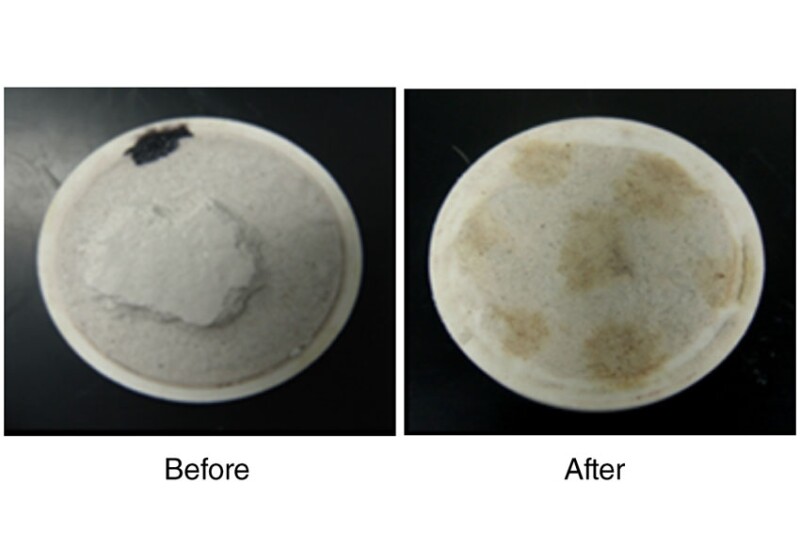
碘测试证实酶处理后不存在淀粉。
图1-确认酶处理后不存在淀粉的奥丁测试。
资料来源:SPE 214628。

基于酶的清理液是滤饼去除应用的首选,特别是在水平井中,因为与传统清理液相比具有多种优势,包括反应性低、腐蚀性较小、对环境影响更积极,以及最终的均匀过滤效果。蛋糕去除覆盖范围。大多数酶基清洁液仅限于低温。在完整的论文中,作者描述了为评估 250°F 温度下水基泥浆的基于酶/原位生成的有机酸清理液而进行的大量实验室工作。

实验工作

在描述他们的实验方法之前,作者在整篇论文中提供了文献综述,详细介绍了滤饼损坏的清理或去除、自然清理、酸和氧化剂、酶、酶破坏剂系统以及影响酶破坏剂性能的因素。

用于执行高压/高温 (HP/HT) 压滤机测试的钻入液是实验室和现场样品。现场样品取自 A 井。钻井液配方中使用 XC 聚合物、淀粉和 PAC-L 聚合物来控制滤失量并增加其粘度。

SPE_logo_CMYK_trans_sm.png
成为 SPE 会员继续阅读
SPE 会员:请在页面顶部登录才能访问此会员专享内容。如果您还不是会员,但发现 JPT 内容很有价值,我们鼓励您成为 SPE 会员社区的一部分,以获得完全访问权限。
原文链接/jpt
Drilling/completion fluids

Enzyme-Based Cleanup Fluid Effective for High-Temperature Filter-Cake Removal

This paper describes results of a study indicating that an enzyme/in-situ organic acid generated cleanup system was effective at degrading filter cake for a water-based-mud field sample, reflected in the obtained return permeability of nearly 83%.

Iodine test confirming the absence of starch following the enzyme treatment.
Fig. 1—Iodine test confirming the absence of starch following the enzyme treatment.
Source: SPE 214628.

Enzyme-based cleanup fluids are preferred for filter-cake-removal applications, especially in horizontal wells, because of several advantages compared with conventional cleanup fluids, including low reactivity, less corrosivity, more-positive environmental impact, and, ultimately, homogeneous filter-cake-removal coverage. Most enzyme-based cleanup fluids are limited to low temperatures. In the complete paper, the authors describe extensive laboratory work conducted to evaluate an enzyme-based/in-situ generated organic acid cleanup fluid for a water-based mud at a temperature of 250°F.

Experimental Work

Before describing their experimental methods, the authors provide a literature review in the complete paper detailing cleanup or removal of filter-cake damage, natural cleanup, acids and oxidizers, enzymes, enzyme-breaker systems, and factors influencing performance of enzyme breakers.

The drill-in fluids used to perform the high-pressure/high-temperature (HP/HT) filter press tests were laboratory and field samples. The field samples were obtained from Well A. XC-polymer, starch, and PAC-L polymers were used in the drilling-fluid formulation to control fluid loss and to increase its viscosity.

×
SPE_logo_CMYK_trans_sm.png
Continue Reading with SPE Membership
SPE Members: Please sign in at the top of the page for access to this member-exclusive content. If you are not a member and you find JPT content valuable, we encourage you to become a part of the SPE member community to gain full access.