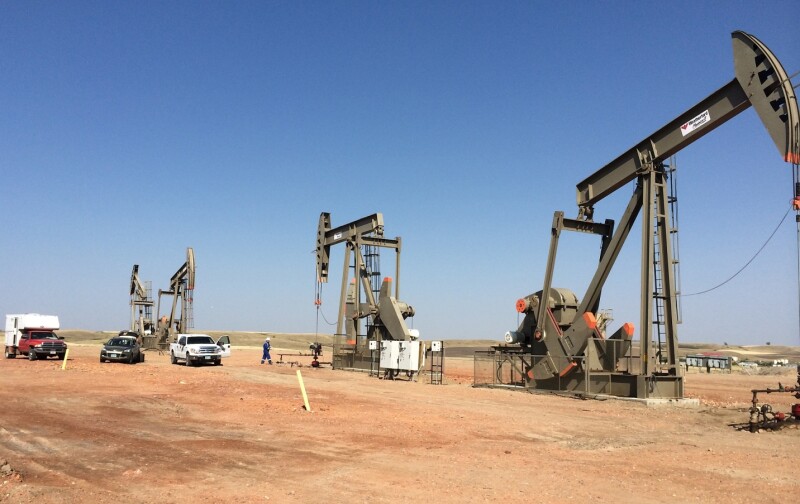
Oil production in the Bakken did something surprising last year—it grew.
Forecasters at Enverus Intelligence Research (EIR) said the unexpectedly strong growth led them to increase their annual forecast for US production growth by 100,000 B/D to 1.2 million B/D.
It is a reminder that there’s a lot of oil production left in what is still the biggest shale oil play after the Permian, but don’t look for a repeat of last year’s growth rate which pushed the Bakken's total production to 1.3 million B/D.
“Enverus Intelligence Research experts attribute this (national) growth to the Williston Basin, which is outperforming expectations but does not anticipate this to continue” based on current rig count, the Enverus release said.
A short-lived surge in drilling rigs working in North Dakota when oil prices were up in 2022 plus the number of drilled but uncompleted wells (DUCs) were the big reasons that oil companies were able to add 150,000 bbl more production than anticipated, said Alex Ljubojevic, director at EIR.
To add barrels, he said companies have been drilling “lease-line wells,” which as the name suggests run laterals near the edge of a lease.
The supply of DUCs, which were left from a period of active drilling in 2019—when US production peaked at 1.5 million B/D—is testimony to the slowdown in the basin since the COVID-19 pandemic.
The number of uncompleted wells was so large that Ljubojevic said ExxonMobil has been adding more than 40 wells a year for several years without drilling.
Those trends reflect the fact that much of the prime acreage has been drilled in this mature shale play.
When Chevron announced the deal to buy Hess—attracted by a huge stake in growing fields offshore Guyana—Chevron’s CEO Mike Wirth said it would provide the company about 15 years of inventory in the Bakken.
"This is a very attractive asset that can deliver kind of plateau production, strong cash flow for many, many years to come," Wirth said in a Reuters story.
But based on Enverus analysis, Hess has only around 60 locations in the lowest-cost tier at which oil can be profitably produced for $50/bbl or less. Ljubojevic added that it has around 500 sites capable of profitably producing in the $50 to $55 range. That is not much above the current price for WTI oil, trading in the low 70s.
He noted that the big players in the region, such as Continental Resources with about 600 of the lowest-cost sites, have larger hoards of the lowest-cost drilling sites left.
Production growth will depend on the price of oil and the ability of producers to find ways to reduce the cost of drilling and completing wells there.
While they are working to maintain the status quo in oil, another report showed gas production is rising to levels where more pipeline and gas processing capacity is needed.
A blog post on RBN Energy’s website said rising gas/oil ratios at older Bakken wells have tilted output toward gas and liquids and that could create another barrier to growth.
It said that since 2019 there has been a 13.4% gain in dry-gas output—after removing gas liquids—to more than 2.4 Bcf/D, which “will soon test the limits of takeaway capacity.”
In the past, operators flared gas when pipelines were at capacity so they could continue drilling wells to produce the more valuable oil.
Now, the value of the liquids in the gas, and regulations in North Dakota limiting flaring, make burning gas look like a less-attractive option.