Nasdaq
HOUSTON – Venezuelan state-run oil company PDVSA has begun contacting customers with crude supply contracts amid the temporary lifting of U.S. sanctions, two people familiar to the matter said on Thursday, moving to resume cash sales to global refiners.
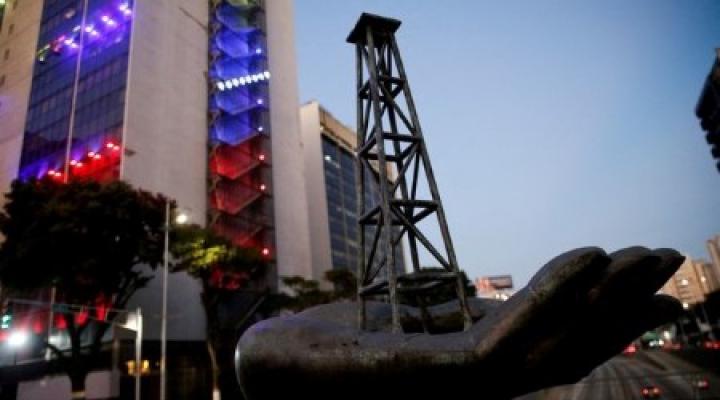
Source: Reuters
The United States on Wednesday lifted for six months most restrictions on Venezuela for producing, selling and exporting oil to its chosen markets. The broad relaxation of sanctions imposed since 2019 will allow some Venezuelan crude to flow to customers previously barred from transactions.
The U.S. decision, made to encourage a fair presidential election in Venezuela next year, is not expected to significantly boost Venezuela’s deteriorated oil production or immediately lead to stronger exports.
PDVSA’s trading division has lost many of its skilled staff with oil traders departing due to low salaries. That loss of experience means new negotiations could take time, or produce few new export deals in the six months of the license, according to the sources, who spoke on condition of anonymity.
Venezuela’s oil output now averages 780,000 barrels per day (bpd) and the license changes could help increase PDVSA’s cash flow by at least reducing the pool of middlemen selling its oil at a discount to customers, mostly in Asia.
Venezuela can now receive direct payments for goods or services under the license issued on Wednesday by the U.S. Treasury’s Office for Foreign Assets Control, which oversees American sanctions.
The payment restrictions had reduced sale proceeds to PDVSA and it joint ventures, which were authorized only to deliver cargoes to repay debt, while cash moving to Venezuela was barred. Not all sanctions on PDVSA were lifted by the United States.
PDVSA’s earnings have been heavily curtailed by sanctions in the past four years. PDVSA’s traditional customers were banned from doing business with it, forcing the company to sell its oil to an ever-changing group of middlemen willing to trade cargoes for large price discounts.
Since November, when Washington authorized Chevron CVX.N to expand its joint ventures with PDVSA and export Venezuelan crude to the United States, that agreement and a few others provided PDVSA’s only access to Western markets.
But even those agreements were limited to debt repayment deals, so little cash was reaching PDVSA’s coffers, constraining its ability to expand oil production and exports.
“The biggest short-term benefit, in an election year, is to sell oil at a full price to its most profitable market, the United States,” Francisco Monaldi, a Latin American energy market expert at Rice University’s Baker Institute, wrote on social media.
“Even in case sanctions are reinstated, the money brought in and the limited additional production will be a ‘bird in hand,'” for Venezuelan President Nicolas Maduro’s administration, Monaldi added.
FROM CHINA TO EUROPE
A delegation led by Maduro traveled to China in September to renew trade and investments. Among proposals discussed by both government and state companies was the reactivation of Venezuela’s debt payments with oil to China, which largely remain under a grace period, and the expansion of joint oil ventures in the country, according to separate sources close to the talks.
China is Venezuela’s main oil-export market, receiving some 430,000 bpd of crude and fuel this year, according to tanker tracking data. Before sanctions, India and the United States were other top destinations.
PDVSA’s largest customers, state-run CNPC and PetroChina 601857.SS through wide oil-for-debt deals, have not imported Venezuelan oil since the United States imposed secondary sanctions in 2020, so small refiners in China have been taking the Venezuelan cargoes instead.
Before sanctions, PDVSA also had oil supply contracts with U.S. oil refiners including Citgo Petroleum, Valero Energy VLO.N and PBF Energy PBF.N; India’s Reliance Industries RELI.NS and Nayara Energy ESRO.M3; and European firms including Italy’s Eni ENI.MI and Spain’s Repsol REP.MC.
It was not immediately clear which of those oil-supply contracts remain unexpired and could be quickly renewed.
PDVSA and Venezuela’s oil ministry did not immediately reply to requests for comment.
President Joe Biden’s administration this week highlighted that not only the election terms signed but a series of side agreements between Maduro, the country’s political opposition and Washington must be fulfilled to keep the licenses active.
The United States gave Venezuela until the end of November to withdraw bans on opposition candidates who would run for president, and a group of political prisoners must be released. The first release of detainees took place overnight.

