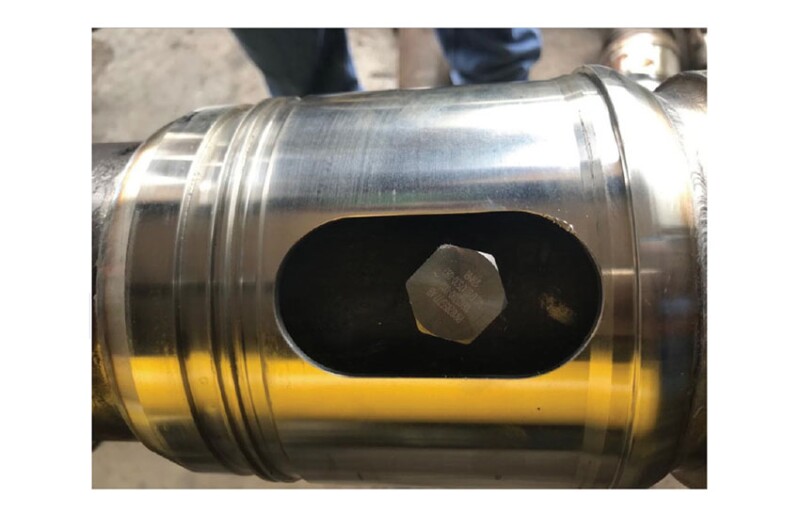
Discovered in 1964, the Beta Field in the Niger Delta sedimentary basin consists of 25 stacked hydrocarbon-bearing reservoirs between 5,500 and 12,000 ft true vertical depth subsea (TVDSS). Oil production peaked at 8,900 STB/D shortly after field startup and has been on the decline. Two horizontal wells, Beta 7 and Beta 8, were planned in the field, but a production forecast of the planned wells showed potential early water breakthrough and high water cut. Autonomous inflow control devices (AICDs) were deployed successfully in the Beta Field for the purpose of minimizing water production and maximizing oil recovery.
Introduction
After history matching, the two new horizontal wells were simulated to target the sweet spots in the reservoir using constraints of oil saturation, porosity and permeability limits, and distance to the oil/water contact (OWC). The history-matched model was then used in forecasting the production profile for the new wells using a target liquid production rate of 2,000 STB/D. The production forecast without inflow control showed water breakthrough in the new wells within the first month of production, reaching to 45% within 3 months of production. Cyclonic AICD completions then were simulated for Beta-7 and Beta-8 horizontal wells, which showed improved oil production and delayed water production.
AICD Retrofit Design
Cyclonic AICDs were selected for application in the Beta Field to improve production performance.