Russia's largest producer of liquefied natural gas (LNG) Novatek last year offered technology to build a plant to produce the gas from Argentina's Vaca Muerta field, a highly-placed source familiar with the proposal said, though the talks have since broken off.
The source said that Novatek proposed to help implement Argentina's plans to build an LNG plant to liquefy gas from Vaca Muerta, a massive shale formation in western Argentina seen as key to boosting the South American country's gas supplies and reducing the need for pricey imports.
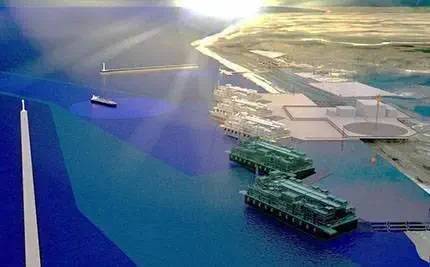
According to the source, Novatek told Argentina's government it has developed a unique infrastructure for construction of LNG plants based on concrete gravity base structures (GBS) in shallow offshore waters.
"There are no negotiations (with Novatek)," Argentina's energy secretariat said in response to the query about the offer by the Russian company. Novatek did not reply to a request for comment. In September, Argentina's state oil company YPF and its Malaysian counterpart, Petronas, inked a deal to build a major LNG plant and a pipeline to transport the fuel.
Novatek's approach indicates Moscow's ability to develop, at least partially, its own large-scale LNG-producing technology, which had been exclusively provided in Russia by Western companies before they withdrew from the country last year due to the conflict in Ukraine.
It also highlights Russian businesses' drive to expand their global reach as far as Latin America after President Vladimir Putin urged business to pivot away from the West. Russian concrete gravity base structures will be used in Novatek's Arctic LNG 2 plant in Russia.
The first technological line, or train, of the plant is due to start production at the end of this year.
Novatek said in its offer to Argentina that the technology allows for construction of one LNG train with a production capacity of 7 million tonnes per year within 2.5-3 years, according to the source.
The Vaca Muerta formation, in Argentina's Patagonian south, is the size of Belgium. It holds the world's second-largest shale gas reserves and the fourth-largest shale oil deposits.
It could become a key global supplier of gas as the world looks for alternatives to Russia, whose energy industry has been heavily sanctioned over its military campaign in Ukraine.
The LNG project promises future dollar earnings for the cash-strapped South American country even though the gains are still years out. Growing production from Vaca Muerta should also allow for less reliance on costly gas imports over time.
(Reuters - Reporting by Vladimir Soldatkin in Moscow, additional reporting by Eliana Raszewski in Buenos Aires; editing by Guy Faulconbridge and Susan Fenton)