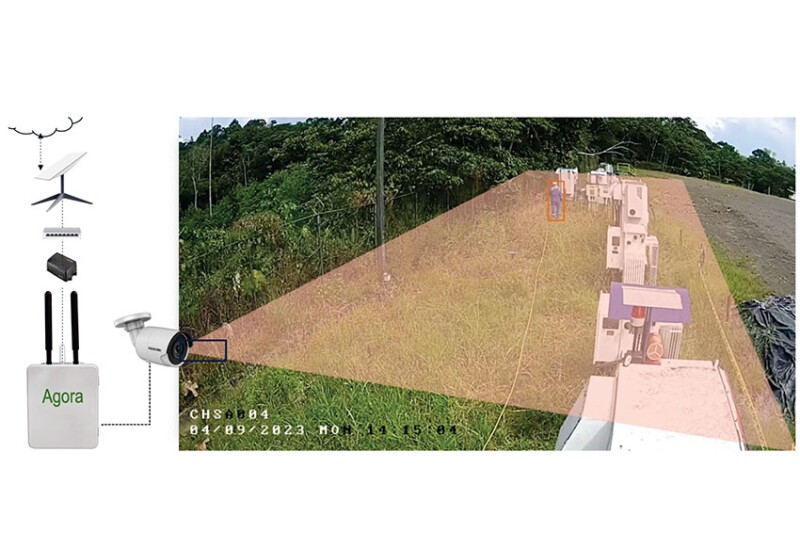
The objective of the complete paper is to showcase the successful digital journey of a brownfield in which digital solutions are enhancing recoverable volume, production, and personnel and process efficiency; minimizing losses; and maximizing the return of investment in a field in the Amazon region. The digital journey implemented has reduced the response time for atypical events in the producer wells from days to minutes, optimizing production and waterflooding surveillance and reducing production losses significantly.
Introduction
The field’s digital transformation began as an initial idea to transform all manual data gathering to remote monitoring and surveillance of all equipment at the subsurface and surface levels, such as electrical submersible pump (ESP) downhole sensors, ESP surface equipment, surface pressure and temperature wellhead and manifold sensors, and flow-station equipment.
In 2012, an integrated asset-monitoring center was developed that relied on both physical and logical tools (software and programming) for operation. The initial concept of the supervisory control and data-acquisition (SCADA) system was for it to operate in every flow station, connected through a fiber-optic communications network. In 2016, the installation and programming of the SCADA system began, along with the laying of fiber optics and the setup of equipment for each well in the field.