Eni To Drill New Wells at Egypt’s Deepwater Zohr Gas Field
The new wells at Zohr are key to a plan to return Egypt’s gas production back to “pre-crisis” levels by June 2025.
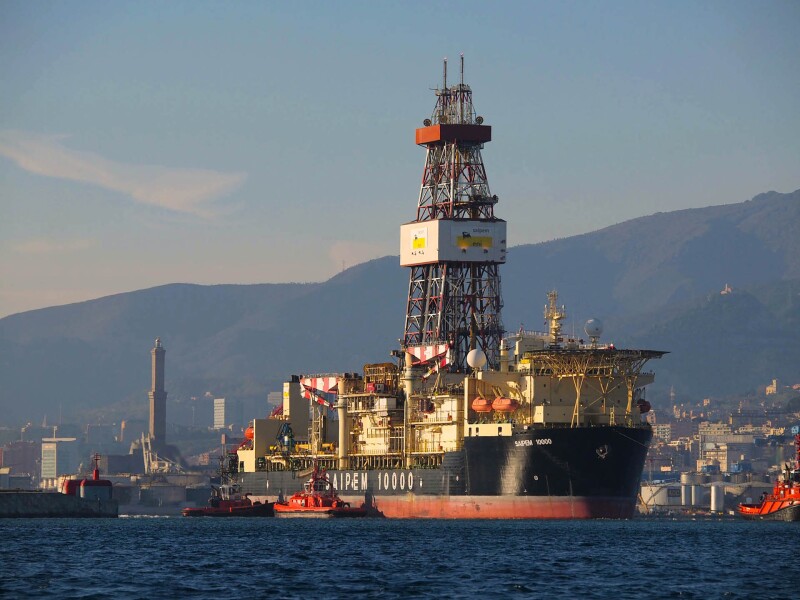
The Saipem 10000 drillship discovered the Zohr gas field in 2015.
Credit: Saipem
Egypt plans to drill two development wells at the Zohr gas field in the Eastern Mediterranean in 2025 as the government seeks to reverse production declines that hit record lows in 2024, causing electrical blackouts and a government shakeup leading to the appointment last July of a new minister of petroleum.
The Saipem 10000 drillship is set to begin drilling the first of two sidetracks following its expected arrival at Zohr, the largest gas field discovered so far in the EastMed, located in waters up to 1700 m deep, at the end of January.
Egypt’s Ministry of Petroleum and Mineral Resources said the $160 million drilling campaign aims to reverse Zohr’s production decline which began in 2021 and hit an all-time low of 1.9 Bcf in early 2024, significantly below the project’s 2019 production peak.
Egypt’s New Minister of Petroleum Karim Badawi, appointed in July after a cabinet shakeup, said the government aims to return domestic production to pre-crisis levels by June. Before his appointment, Badawi was the director of SLB New Energy–Middle East and North Africa.
Zohr’s Impact on Egyptian Energy
In August 2019, Eni reported Zohr’s production at more than 2.7 Bcf/D—some 5 months ahead of schedule. The commissioning of a second 30-in. pipeline in conjunction with the completion and optimization of the plant treatment capacity eventually drove production further to 3.2 Bdf/D by year-end, according to Eni.
The Italian major has operated Zohr since its discovery in 2015. The field accounted for 40% of the country’s gas production until output fell to less than 20 Bcm—about 40% below capacity—contributing to Egypt’s persistent energy crisis and recurring power blackouts.
The Egyptian National Gas Holding Company (EGAS) holds 50% of the joint venture that is developing Zohr. Foreign partners comprise the other 50% with Eni holding a 30% operator interest together with nonoperating partners: Russia's Rosneft (30%), BP (10%), and the UAE’s Mubadala Energy (10%).
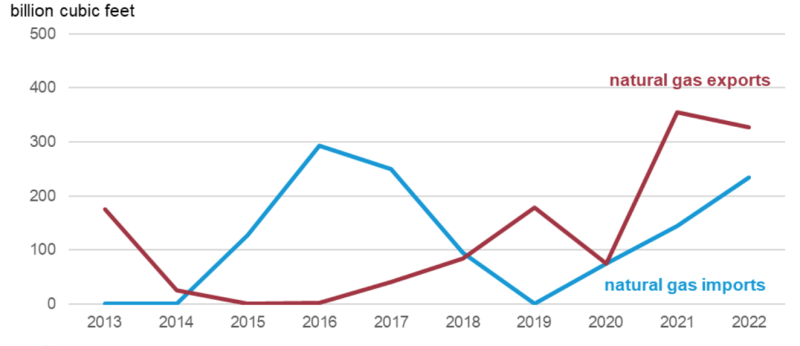
Egypt’s annual natural gas exports and imports, 2013–2022.
Source: US Energy Information Administration
Zohr’s decline in production has been a significant driver in Egypt’s overall dip in natural gas production to 13.4 Bcm in 1Q 2024 compared to 15.5 Bcm in the same quarter of 2023.
Technical problems such as natural loss of reservoir pressure combined with economic issues related to the costs of having to pay for imports to supply the domestic market led to overdue payments to foreign investors, including Eni.
However, the Egyptian government has begun settling its outstanding debts, with Eni receiving approximately $600 million in payments in mid-September 2024—a development that, according to regional media, paved the way for Eni’s decision to proceed with drilling the two new wells.
EastMed Gas Hub Still Doable?
Cairo’s need to return to LNG imports to supply its domestic needs was a definite setback to the country’s ambitions to become a net LNG exporter and anchor for an EastMed gas hub, a natural fit given Egypt’s existing LNG infrastructure.
The gas hub issue, though, has been put back on the table in the months since Badawi’s appointment.
In December, EGAS entered into a 10-year charter agreement with US-based New Fortress Energy to lease a second floating storage and regasification unit (FSRU), the Energos Eskimo, to feed the national gas grid.
The unit, featuring a storage capacity of 160,000 m3 of LNG and a regasification capacity of up to 750 Mcf/D, will be deployed to EGAS’ LNG import terminal located at Ain Sokhna, Egypt, and is expected to begin operations this summer.
Currently in operation at Ain Sokhna, according to the US Energy Information Administration, is FSRU Höegh Galleon which has been deployed under a 20-month agreement between Höegh LNG and EGAS.