西非近海的深水井穿过复杂的断层块,其中的砂体厚度可达数十米。完整论文中描述的研究提供了在各种具有挑战性的油藏条件下使用自主流入控制装置 (AICD) 设计先进完井的见解,从而能够最大限度地延长油井的生产寿命。
介绍
本文的研究区域是一片颇具挑战性的棕地。钻井是在困难的深水条件下进行的,目标储层是透镜状砂岩和页岩层。砂岩体的固结性较差,这进一步增加了生产的复杂性。
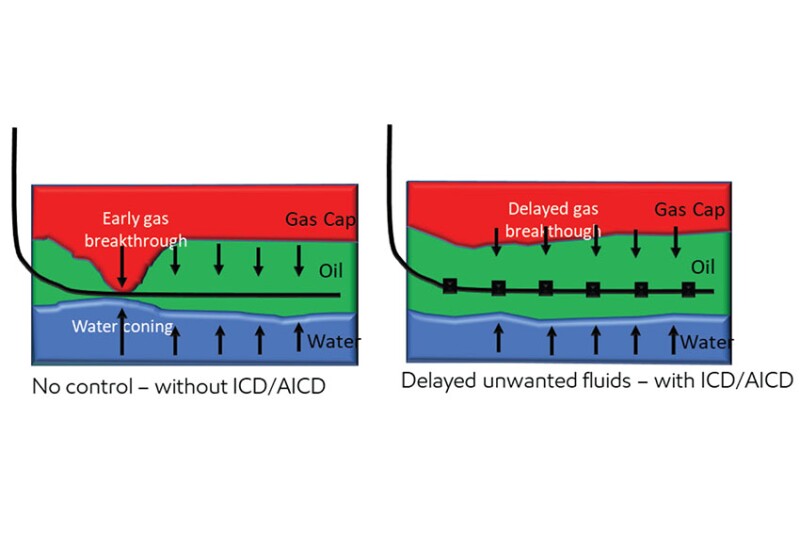
西非近海的深水井穿过复杂的断层块,其中的砂体厚度可达数十米。完整论文中描述的研究提供了在各种具有挑战性的油藏条件下使用自主流入控制装置 (AICD) 设计先进完井的见解,从而能够最大限度地延长油井的生产寿命。
本文的研究区域是一片颇具挑战性的棕地。钻井是在困难的深水条件下进行的,目标储层是透镜状砂岩和页岩层。砂岩体的固结性较差,这进一步增加了生产的复杂性。
Deepwater wells offshore West Africa traverse a complicated faulted block with sand bodies that can feature thicknesses of tens of meters. The study described in the complete paper provides insight into designing advanced well completions under various challenging reservoir conditions with autonomous inflow control devices (AICDs) that enable maximizing the producing life of the wells.
The study area for this paper has been a challenging brownfield. Wells have been drilled in difficult deepwater conditions, and the target reservoirs have been lenticular sands with interbedded shale layers. To further complicate production, the sand bodies are poorly consolidated.