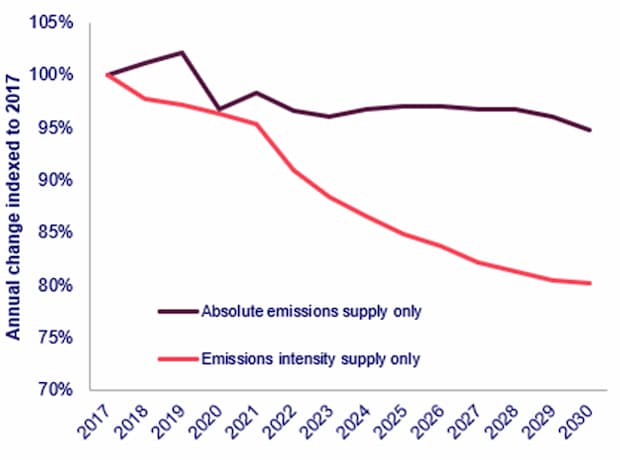
Scope 1 and 2 upstream emissions intensity has declined 12% since 2017. However, absolute emissions could plateau due to production growth, according to a new report from Wood Mackenzie.
In the report, “Is upstream oil & gas delivering on decarbonization?” Wood Mackenzie finds that while flaring reduction, methane detection and repair, electrification and CCUS have put a dent in emissions intensity, higher volumes are increasing absolute emissions in some regions. Including the other components of the oil and gas value chain, absolute emissions could exceed pre-pandemic levels by 2028.
“Flaring, methane and venting initiatives show that progress can be made, but efforts need to move beyond the low-hanging fruit,” said Adam Pollard, principal analyst with Wood Mackenzie. “For example, over 10 bcf of gas is still flared daily. Overall upstream emissions remain intrinsically linked to production. Combustion emissions remain the largest sources, but progress on abatement has been limited. Electrification can deliver big reductions but only where low carbon power is available.”
Majors and International Oil Companies (IOCs) have led the way on emissions intensity improvements, driven by net zero commitments and increasing regulations and carbon taxes. However, National Oil Companies (NOCs) account for 51% of upstream emissions and not all have followed the IOCs lead, according to Mr Pollard.
Superemitters play a significant role as well, with half of the upstream sector’s emissions coming from just 165 oil and gas fields. This category includes persistent flares, giant Middle East fields, oil sands projects and integrated LNG.
“Moving forward, new developments will have lower than average industry emissions and companies will use M&A as a lever to maximize the proportion of advantaged barrels in their portfolio,” added Mr Pollard. “However, many companies and governments have catching up to do. Ramping up efforts on emissions starts with setting targets, developing decarbonization strategies, joining existing decarbonization initiatives and learning from the Majors, IOCs and NOCs that are already on the journey.”