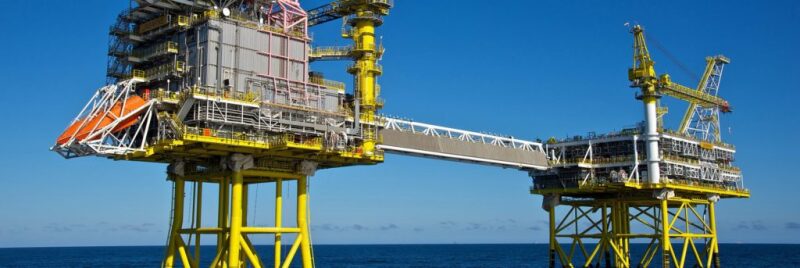
The UK North Sea is witnessing a “disappointing” lack of wells being drilled to curb the decline in production and secure more domestically produced hydrocarbons, according to a new report from the North Sea Transition Authority (NSTA).
The number of exploration and appraisal (E&A) wells has dropped over the past decade, from 67 in 2012 to 12 in 2022. The NSTA said that considering fewer operational constraints, the low level of activity is “likely due to limited capital available for UKCS E&A activity.”
There were 12 E&A wells drilled in 2022—eight exploration and four appraisal wells—compared to 10 in 2021 (five exploration and five appraisal). Despite the shortfall in the number of E&A wells drilled, more than 334 million BOE of potential resources have been discovered in the past 3 years.
“Appraisal of this potential resource and progression towards development investment decisions is one of the keys to continued, secure domestic oil and gas production as the energy transition progresses,” the NSTA said in the report.
As for development wells, only 48 were drilled in 2022, falling short of the NSTA’s baseline ambition of 60 development wells per year. This shortfall is set to continue as there are only 53 wells planned for 2024 and 36 for 2025, compared to 62 wells in 2021 and 73 in 2020.
Of the 48 wells completed—mainly in the Central North Sea and Northern North Sea—40 are producers, and eight are water injectors. This is down from the 62 wells completed in 2021. Total development well spend of £1.23 billion was slightly less than the £1.33 billion in 2021, which the NSTA said indicated that the average wellbore cost in the UKCS has risen.
“This may be, in part, due to a higher rate of nonproductive time in 2022 of 22% of the cost, as compared to 17% in 2021,” the agency said, adding that the UKCS is a mature basin with existing well infrastructure. The basin, particularly in the Central North Sea and West of Shetland, "presents opportunities to access new areas of a reservoir and increase recovery factors, via new wells and sidetracks from existing wellbores.”
Well interventions, outside of restoring shut-in wells, have remained low, the NSTA said, with “only 88 optimization jobs completed and a decrease in safeguarding jobs from 235 to 208.”
Concerns and Turnarounds
The NSTA warns that this decline in activity poses a threat as operators may delay investment, leading to further production declines and bringing cessation of production (COP) closer. The total well stock has steadily reduced as fields reach COP and are not being replaced by new wells, it said, warning that the decline will continue as more fields reach COP by 2030.
“We are committed to helping ensure UK energy security, and well interventions which increase production from existing facilities can play a key role in that. Production from existing facilities can also have a lower carbon footprint,” said Andy Brooks, NSTA director of new ventures.
“It is also vitally important that we increase development drilling in order to sustain domestic supply, and we are encouraged by the forecast pickup on exploration and appraisal activity in the next few years.”
The NSTA said it is “concerned that operators only achieve around 60% of their projected drilling activity, and wants to see that figure substantially improve, as it gives supply chain greater confidence in the volume of work coming through.”
However, operators currently suggest that activity may pick up; with high and moderate confidence, they forecast that 77 E&A wells will be drilled between 2023–2025, the NTSA added, noting that:
- 12 of these 77 wells are forecast in 2023, 17 in 2024, with the remainder in 2025.
- 34 wells are in the Central North Sea, 15 in the Southern North Sea/Irish Sea, and 13 in the Northern North Sea/West of Shetland.
Other signs of a turnaround include the recent final investment decision taken by Equinor and Ithaca Energy to begin development of the Rosebank field located off the northwest coast of the Shetland Islands. Government and industry leaders also expressed their support for increased activity on the UKCS at the recent Offshore Europe event. In July, UK Prime Minister Rishi Sunak committed to future oil and gas licensing rounds as a new analysis showed domestic gas production has around one-quarter the carbon footprint of imported liquefied natural gas.