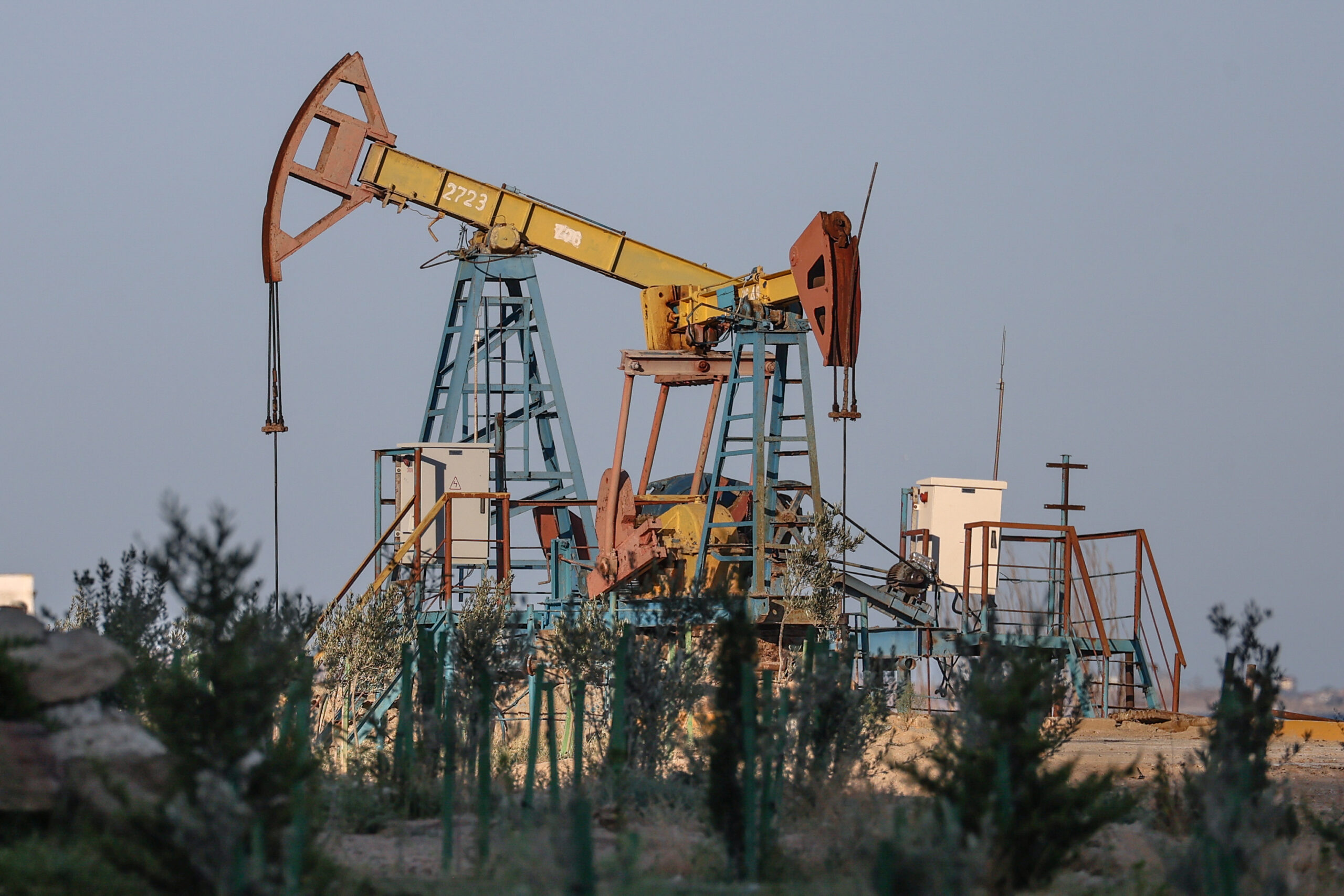
The increase in the rate of drilling by Russian oil companies is due, among other things, to the depletion of existing wells – oil companies are forced to drill more in order to maintain production at the current level; the increase in horizontal drilling and the completion of work since last year also contribute, according to experts interviewed by RIA Novosti.
Earlier Monday, Bloomberg reported that Russian oil companies drilled 14.7 thousand kilometers of production wells in the first half of the year, which is 6.6% more than planned and 8.6% more than in the same period in 2022. The agency’s experts noted that, taking into account the record figures of last year, they expect a new high in 2023 as well. The publication emphasized that companies in Russia are setting record drilling rates, despite voluntary cuts in oil production.
“Drilling is needed not only to increase production, but also simply to keep it “on the shelf”. The acceleration of drilling may be due to the depletion of existing wells,” commented Igor Galaktionov, an expert on the stock market at BCS Mir Investments, to RIA Novosti.
Dmitry Kasatkin, partner of Kasatkin Consulting, agrees with him. He explained that due to deteriorating production conditions, companies are forced to drill more to maintain production at current levels. Also, according to him, the main contribution to the growth of drilling is made by an increase in the volume of horizontal drilling, which makes it possible to “reach out” to the remaining uninvolved layers in mature fields without building a new well.
In addition, Kasatkin added, last year many companies were unable to implement field development programs due to a shortage of capacities associated with uncertainties in the economy. In the first half of this year, they completed the work.
VOLUNTARY REDUCTIONS
Since March, Russia has voluntarily reduced oil production by 500,000 barrels per day from February levels. Also, as Deputy Prime Minister of the Russian Federation Alexander Novak announced in early July, in August the country will reduce oil exports by 500,000 barrels per day. According to the deputy head of government, within these restrictions, companies will decide for themselves whether to reduce oil production in order to meet this reduction in supplies.
Kasatkin shared his forecast that the voluntary reduction in oil production will begin to affect drilling in the second half of the year. In the meantime, companies are preparing for the fact that China will “accelerate” consumption, and the aggregate demand for oil will exceed the figures of 2022, which will then allow to abandon the restrictions, he explained.
Also, according to the expert, the reduction in production is likely to affect low-margin assets, and the development of profitable reserves is likely to continue at the same pace.
TECHNICAL EQUIPMENT
Answering the question whether the departure of foreign oilfield services companies could have caused an increase in drilling rates due to less technologically advanced equipment, Kasatkin emphasized: “The quality of technologies has absolutely nothing to do with it, at the moment and in the medium term, there is no need to worry about technological equipment.”
At the same time, he believes that in the long term, Russian companies need to systematically invest in this area in order not to face problems in the field of engineering and technology in the future.
Galaktionov, on the contrary, singles out weaker technical equipment as one of the possible reasons for the increase in drilling rates.
“There may be a sanctions effect when less productive domestic equipment is used in certain areas for drilling wells, which takes more time to achieve results,” he said.
Source


 by
by