The complex state of play in the offshore energy market space, with its twisting and reshaping pathways, brings not only challenges to overcome but also opportunities to prosper to all who dare to venture both into its old and emerging dimensions. With these intricacies in mind, EnerMech, an Aberdeen-headquartered integrated solutions specialist, has pinpointed the focus on high-growth regions, subsea work, and floating production, storage, and offloading (FPSO) assignments as its tripartite resilience formula, which it uses as keys to achieving resilience against the backdrop of ongoing economic and geopolitical woes.
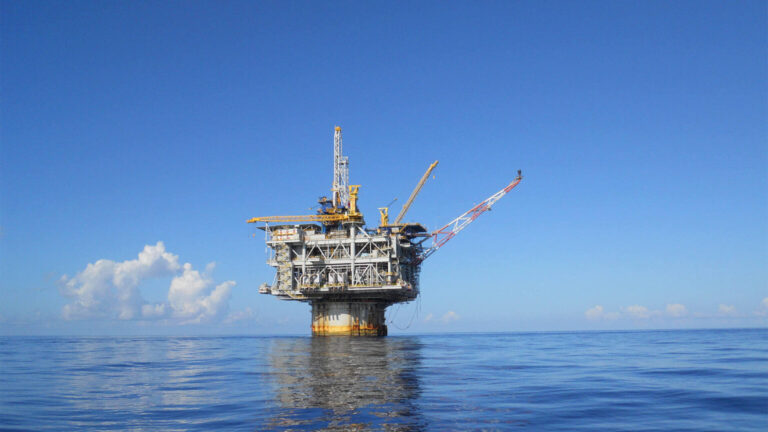
EnerMech recently won its first major decommissioning campaign in the U.S. Gulf region with ExxonMobil; Source: EnerMech
While diving into the current offshore energy trends and complications to shed light on the crucial headwinds and tailwinds of this era, Ruairi Kerr, EnerMech’s Chief Commercial Officer (CCO), has offered insights into the FPSO and oil and gas projects the firm is working on alongside the existing growth opportunities within the global offshore energy arena.
Kerr is a chartered civil engineer, who has experience in the infrastructure and oil and gas sectors in the Gulf Cooperation Council (GCC) member states, Asia Pacific, and Europe. Before joining EnerMech in 2020, he worked at Kentz as Regional Director Of Business Development for APAC.
As winds of change sweep across the energy ecosystem, how can the offshore energy industry ensure its resilience in the face of the current challenges, spanning the regulatory realm, government policies, economy, trade wars, and other ongoing issues?
Ruairi Kerr: While there are many broader factors shaping the global energy landscape, one of the most immediate challenges facing the offshore sector is the sustained period of low oil prices, driven in part by OPEC’s continued output and market oversupply. This creates pressure across the industry, even as we witness unprecedented levels of investment in offshore deepwater developments.
Resilience, therefore, hinges on the ability to operate efficiently and remain focused on areas where investment is strongest. EnerMech is deeply rooted in offshore deepwater operations and is active in seven of the ten key global markets.
By staying aligned with these high-growth regions and leveraging our core capabilities in subsea and FPSO-related services, we are able to remain agile and competitive – even amid a challenging economic backdrop.
Could you tell us more about the main headwinds and tailwinds of today and tomorrow that the offshore energy industry needs to be aware of and come to grips with?
Ruairi Kerr: A major headwind is undoubtedly the sustained low oil price environment. This creates pressure across the value chain, particularly when paired with high commercial risk models like lump-sum contracting.
These models demand offshore contractors absorb significant logistical, operational and financial risks, which can challenge the survival of smaller players. On the tailwind side, we are seeing a surge in offshore deepwater investment across key global markets.
What would you pinpoint as the biggest global challenge for the offshore energy industry to tackle, especially in its oil and gas arena?
Ruairi Kerr: One of the most pressing challenges is the industry’s contracting and commercial risk environment. Large engineering, procurement, construction, and installation (EPCI) contractors are taking on multibillion-dollar projects under lump-sum agreements, which pushes a disproportionate amount of risk onto the supply chain.
This is particularly problematic in offshore environments, where logistics, customs, equipment movement and personnel deployment are complex and unpredictable. If not managed carefully, this risk transfer could lead to the disappearance or consolidation of smaller but vital suppliers.
Where do you see the highest potential for growth within the global offshore energy landscape?
Ruairi Kerr: The strongest geographical growth opportunities lie in Brazil, Guyana, Suriname, the Gulf of Mexico, West Africa and Mozambique. In terms of project types, the focus is on complex subsea infrastructure tied to FPSO and FLNG vessels.
These developments require integrated capabilities across both fabrication (often in Asia) and offshore installation. EnerMech is uniquely positioned to support this entire value chain, from subsea through to topside integration, setting us apart as one of the few companies with this breadth of capability.
As EnerMech has secured multiple FPSO and oil and gas jobs, such as the ones in Guyana, could you tell us more about these and similar assignments the company is keen on pursuing in the future?
Ruairi Kerr: Since ExxonMobil’s 2015 Liza-1 find, Guyana has become one of the most significant deepwater discoveries of the past decade, with over 11 billion barrels discovered to date, Production has scaled from zero in 2019 to over 600,000 barrels per day in 2024, with targets exceeding 1.2 million by 2027, with this info EnerMech has made significant investments in its Energy Solution BL and will continue to expand its business in Guyana to enhance and secure its market share and maintain its status as the number one pre-commissioning and integrated deepwater service provider in Guyana.
To date EnerMech has executed all the pre-commissioning activities on all the Guyana FPSOs including the subsea pre-commissioning. EnerMech intention is to use its location as a central base and launching pad, supporting Guyana, Suriname & Trinidad. The Guyana Base has the potential to assist as launching pad with entry to Brazil and even assist to support projects in West Africa.
What will be EnerMech’s core offshore energy focus over the next decade and up to 2050?
Ruairi Kerr: Our business has been restructured to reflect a long-term strategic focus across three key business units, delivering value across the full asset lifecycle, from design to decommissioning, these are: Energy Solutions (offshore), Infrastructure and Industrial Solutions (onshore), and Lifting Solutions.
For offshore, our CapEx efforts are focused on subsea deepwater infrastructure and FPSO-related projects, while our OpEx focus lies in maintaining critical lifting assets, such as cranes on offshore platforms. This approach supports both new development and life-of-field operations, ensuring we are fully aligned with the offshore industry’s needs today and in the decades ahead.
Thank you for this interview! Is there anything you would like to add about the current and future opportunities across the entire offshore energy domain?
Ruairi Kerr: Thank you for your time. One thing I would like to add is that our recent shift from a regional to a global business line structure marks a pivotal transformation for EnerMech. This change has introduced greater consistency in service delivery, standardised processes across geographies and enhanced our ability to mobilise equipment and talent quickly, wherever our clients need us.
We believe this new structure positions us to be more agile, responsive, and effective in supporting the offshore energy industry through whatever challenges and opportunities the future holds.
Follow Offshore Energy’s Fossil Energy market on social media channels: