人工举升

研究评估承重高功率 ESP 电缆的长期腐蚀风险

本文介绍了模拟不同酸井和延长电化学腐蚀条件的实验室测试,以确定所选装甲冶金术在井下腐蚀环境中的适用性。

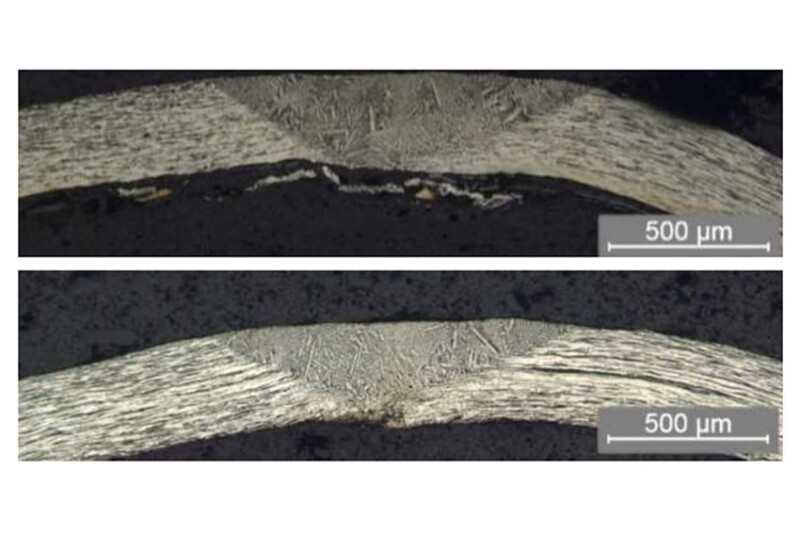
显微照片(顶部和底部)显示了通过 90 天 15% H2S 测试的两个不同样品的横截面上的焊缝。蒙乃尔合金基质和焊缝表面在 90 天、15% H2S 测试期间未出现应力开裂
显微照片(顶部和底部)显示了通过 90 天 15% H2S 测试的两个不同样品的横截面上的焊缝。蒙乃尔合金基质和焊缝表面在 90 天、15% H2S 测试期间未出现应力开裂。
来源:OTC 34898。

在本研究中,在酸性油井的生产油管内部署了一条适合用途的电潜泵 (ESP) 承重电力电缆,以延长使用寿命。项目经济性要求电力电缆冶金术能够可靠地承受高达 15% 的硫化氢 (H 2 S) 和高盐度生产液的长期暴露。已经进行了模拟不同酸性井和长期电偶腐蚀条件的实验室测试,以确定所选装甲冶金术在井下腐蚀环境中的适用性。

介绍

近年来,各种类型的承重电力电缆部署 ESP (CDESP) 系统已经推出,无需在完井时安装或移除传统 ESP,并将 ESP 切换时间缩短 80% 以上。最近,已经开发并测试了实时井 CDESP 系统,以消除井压作业的需要。

这种系统中最关键、最昂贵的部件是承重电缆。电缆具有双重用途,既可以输送,又可以为 ESP 长期供电。在传统的人工举升作业中,ESP 是使用生产油管输送的,油管外部绑有一条非承重电缆。

图片尺寸 1280X1280
以 SPE 会员身份继续阅读
SPE 会员:请在页面顶部登录以访问此会员专属内容。如果您不是会员,但您认为 JPT 内容很有价值,我们鼓励您加入 SPE 会员社区以获得完全访问权限。
原文链接/JPT
Artificial lift

Study Evaluates Long-Term Corrosion Risk of Load-Bearing, High-Power ESP Cable

This paper describes laboratory tests simulating varying sour-well and extended galvanic corrosion conditions to determine the adequacy of selected armor metallurgies in downhole corrosive environments.

Photomichrographs (Top and Bottom) showing the seam weld on the cross section of two different samples taken through the 90-day 15% H2S test. The Monel matrix and the seam weld surfaces show no stress cracking induced during the 90-day, 15% H2S testing
Photomichrographs (Top and Bottom) showing the seam weld on the cross section of two different samples taken through the 90-day 15% H2S test. The Monel matrix and the seam weld surfaces show no stress cracking induced during the 90-day, 15% H2S testing.
Source: OTC 34898.

In this study, a fit-for-purpose electrical submersible pump (ESP) load-bearing power cable was deployed inside the production tubing of a sour oil well for an extended period of service. Project economics required the power-cable metallurgy to survive long-term exposure reliably for up to 15% hydrogen sulfide (H2S) and high-salinity production fluids. Laboratory tests simulating varying sour well and extended galvanic corrosion conditions have been performed to determine the adequacy of the selected armor metallurgy in downhole corrosive environments.

Introduction

In recent years, various types of load-bearing power cable-deployed ESP (CDESP) systems have been introduced, eliminating the need to install or remove a conventional ESP along with the completion and reducing ESP changeover time by more than 80%. More recently, live-well CDESP systems have been developed and tested to eliminate the need for a well-kill operation.

The most-critical and costly component of such a system is the load-bearing power cable. The cable has the dual purpose of conveyance and long-term powering-up of the ESP. In a conventional artificial lift operation, the ESP is conveyed using the production tubing with a non-load-bearing power cable strapped to the outside of the tubing.

×
SPE_logo_CMYK_trans_sm.png
Continue Reading with SPE Membership
SPE Members: Please sign in at the top of the page for access to this member-exclusive content. If you are not a member and you find JPT content valuable, we encourage you to become a part of the SPE member community to gain full access.