Alaska is unleashed! On his first day in office, President Trump signed an executive order recognizing Alaska as a true energy warehouse, paving the way for unprecedented opportunities in resource development and energy independence. Read the Executive Order:鈥�
The path forward is clear: reforming the permitting process and unleashing American LNG needs to be a top priority in order to strengthen America at home and abroad. pic.twitter.com/PWhTRw16R4
The upstream oil & natural gas industry has reduced its methane intensity by 61% and total methane emissions by 42% since 2015.
Through development of new tech and improved operating practices, the US upstream oil and gas industry is leading the way in emission reductions. pic.twitter.com/nbIzt97CTB
The U.S. leads in tackling the climate crisis. We've invested heavily in clean energy, led the world to mobilize climate finance for vulnerable communities, and focused global attention on the urgent need to cut super pollutants like methane. pic.twitter.com/g2jhPDhEdq
虽然该公司指出,在共和党控制的国会下,通胀削减法案面临潜在挑战,但该公司认为,不太可能立即废除 IRA 低碳能源条款下的关键税收抵免,如 CCUS(45Q)、清洁能源制造和脱碳(45X、48C)、技术中立的清洁电力(48E、45Y)和清洁氢能(45V),因为这些计划得到了两党的支持,并使共和党领导的州受益匪浅。
In with fossil fuels, out with renewables seems to be the prevailing theme running on a loop to describe the newly sworn-in U.S. President’s energy policy, as fears continue to mount over the changes President Donald Trump has set in motion by declaring a national energy emergency, a temporary freeze on offshore wind leasing, reversal of the U.S. liquefied natural gas (LNG) export permitting pause, and others he plans to implement to bolster Big Oil’s role in the energy sector while narrowing down and even cutting off support for some clean energy alternatives considered crucial to power the transformation to net zero. Will Trump’s upcoming oil and gas era be a setback, holding back U.S. renewables’ progress, or a shot in the arm galvanizing greener zest?
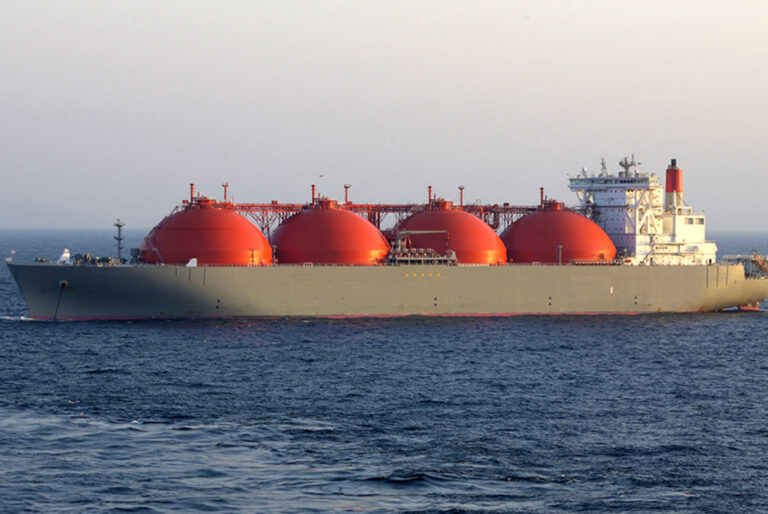
LNG tanker (for illustration purposes); Source: U.S. Department of Energy
The offshore energy landscape is becoming more dynamic day in and day out, driven by the fight to usher in a low-carbon future and the struggle to fortify global energy security amid geopolitical and other challenges that have risen over the past three years and threaten to tear down the very fabric of the world as we know it. Regardless of the challenges the oil and gas industry is forced to contend with and the obstacles in its growth path, it keeps soldiering on. Multiple ongoing projects hit new milestones and set the stage for new ones to take their first steps toward development thanks to a series of multimillion—and billion-dollar deals.
While the U.S. Bureau of Ocean Energy Management‘s move to set the stage for the next oil and gas leasing round to be held for offshore acreage in the Gulf of Mexico (GOM) with a draft programmatic environmental impact statement (EIS) was seen as a step in the right direction by National Ocean Industries Association (NOIA), it still took the opportunity to urge Congress and the Trump administration to reevaluate and revise the scaled-back program, which comes with only three lease sales up to 2029.
Erik Milito, NOIA’s President, said: “It’s clearly better to produce our energy from the Gulf of Mexico than for the global market to rely upon foreign sources with higher emissions and weaker environmental performance. Furthermore, we urge Congress and the incoming administration to reassess the limited schedule of only three lease sales in the current offshore program and take steps to restore our leasing program to bolster investment in U.S. projects.
“A more robust schedule would better reflect the Gulf’s indispensable role in our energy landscape and support both energy development and environmental stewardship. NOIA is committed to working with all stakeholders to advocate for policies that uphold the Gulf of Mexico as a key pillar in energy security, economic progress, and total U.S. energy leadership.”
This content is available after accepting the cookies.
Both the NGSA and the Center for LNG (CLNG) welcomed the news of a change in the U.S. administration’s energy policies from 2025 after the 2024 election was officially called for President Trump, primarily because of the belief that Trump will unleash oil and gas while also enabling renewables growth, even though some fear that the energy transition will get stifled under his rule. Previously, the U.S. Department of Energy (DOE) said environmental reviews needed to be finished with all agencies before any pending LNG export projects to non-free trade agreement countries would get the go-ahead.
Given the level of importance assigned to LNG in numerous energy sector decarbonization pathway analyses, the Natural Allies Leadership Council, including former Senator Mary Landrieu (D-LA), former Congressman Tim Ryan (D-OH), former Congressman Kendrick Meek (D-FL), and former Philadelphia Mayor Michael Nutter, found the Biden Administration’s report concerning U.S. liquefied natural gas export terminals “deeply disappointing,” perceiving it as an assault on the exportation of U.S. LNG.
“There is a strong consensus that increased U.S. LNG exports will not adversely impact domestic prices. In fact, we have a decade of federal data proving that rising U.S. LNG exports have not caused price spikes for Americans or impacted industrial competitiveness, even as the United States has become the world’s largest exporter. The Biden Administration’s false alarms of rising prices don’t hold up based on recent history. Experts used similar scare tactics over a decade ago, projecting prices would rise by 50%, but in fact domestic prices have remained flat,” according to the Natural Allies Leadership Council.
They argue that multiple reports have shown the benefits of increased natural gas exports in reducing global emissions and strengthening America’s national security. The limiting of U.S. LNG exports is said to risk up to 900,00 American jobs, empower Russia and Iran with fewer environmental safeguards, and abdicate U.S. leadership on mitigating global climate change, as developing countries will largely default to coal without U.S. LNG.
This content is available after accepting the cookies.
A recent ICF study noted the world would have seen 112 million more tons of greenhouse gas emissions (GHG) without U.S. LNG in 2022, as coal and oil would have been used rather than wind or solar. As the LNG pause has ended, the U.S. Department of Energy has returned to regular order of business, with the Office of Fossil Energy and Carbon Management (FECM) directed to resume consideration of pending applications to export American LNG to countries without a free trade agreement (FTA) with the United States under the Natural Gas Act.
Charlie Riedl, Executive Director of the Center for LNG, said: “U.S. LNG exports are a bipartisan success story, and we look forward to working with Presidentelect Trump and his new administration to unlock even greater economic, climate, and geopolitical benefits by, first and foremost, lifting the Department of Energy’s ‘pause’ on LNG export permits. As global energy demand continues to grow, U.S. LNG exports will play a critical role in ensuring the United States remains a global energy powerhouse.”
This content is available after accepting the cookies.
When Trump announced Doug Burgum, North Dakota Governor, as the nominee to lead the Interior Department, he underlined that Burgum would be named Chair of a newly created National Energy Council, seen as an ‘energy czar’ role, which would enable him to task various agencies with energy responsibilities, allowing him to become an ‘all-of-the-above’ energy governor.
Trump, who believes his energy agenda has the power to curb inflation, also hinted at this possibility when he disclosed that Burgum’s authority will cover “all Departments and Agencies involved in the permitting, production, generation, distribution, regulation, transportation, of ALL forms of American Energy.”
While openly stating plans to cut the red tape, the U.S. President further elaborated: “This Council will oversee the path to U.S. ENERGY DOMINANCE by cutting red tape, enhancing private sector investments across all sectors of the Economy, and by focusing on INNOVATION over longstanding, but totally unnecessary, regulation.”
Big Oil at the heart of American energy dominance
Trump’s return to the White House has brought significant shifts in the domestic and global political landscape in many spheres, including the energy domain, ensuring the promise of a boost in American offshore energy remains unwavering. Before Trump stepped back into the White House, Milito emphasized the critical legislative agenda ahead, identifying the funding of the federal government and passing key legislation, such as permitting reform, as areas that should be the 47th U.S. President’s top priorities, as mandating offshore oil and gas and wind lease sales is crucial to ensuring more certainty and keeping these investments and projects within the United States.
While Trump agrees with Milito on the oil and gas boost, he is not a fan of bolstering offshore or onshore wind power. Quite the contrary, the new U.S. President made it abundantly clear that his energy policies would end leasing to massive wind farms that “degrade our natural landscapes and fail to serve American energy consumers,” according to the White House, which added: “The President will unleash American energy by ending Biden’s policies of climate extremism, streamlining permitting, and reviewing for rescission all regulations that impose undue burdens on energy production and use, including mining and processing of non-fuel minerals.”
By declaring an energy emergency to use all necessary resources to build critical energy infrastructure, Trump has certainly done what he said he would do including withdrawing from the Paris Climate Accord, putting the America First Trade Policy in action, and setting off an offshore wind freeze, reminiscent of former President Joe Biden’s LNG pause, thanks to a temporary withdrawal of all areas on the Outer Continental Shelf (OCS) from offshore wind leasing until the presidential memorandum is revoked, which is not likely to come until a review of the federal government’s leasing and permitting practices has been carried out for wind projects.
This content is available after accepting the cookies.
Alaska is unleashed! On his first day in office, President Trump signed an executive order recognizing Alaska as a true energy warehouse, paving the way for unprecedented opportunities in resource development and energy independence. Read the Executive Order:…
Trump highlighted: “Energy security is an increasingly crucial theater of global competition. In an effort to harm the American people, hostile state and non-state foreign actors have targeted our domestic energy infrastructure, weaponized our reliance on foreign energy, and abused their ability to cause dramatic swings within international commodity markets. An affordable and reliable domestic supply of energy is a fundamental requirement for the national and economic security of any nation.
“The integrity and expansion of our Nation’s energy infrastructure —- from coast to coast -— is an immediate and pressing priority for the protection of the United States’ national and economic security. It is imperative that the Federal government puts the physical and economic wellbeing of the American people first.”
LNG and offshore wind switch places: Unfreezing one to freeze the other
President Trump has named Mark Christie as Chairman of the Federal Energy Regulatory Commission (FERC), which is not surprising given that Christie began his term as a FERC Commissioner on January 4, 2021, after being nominated by President Trump in July 2020 and confirmed by the U.S. Senate on November 30, 2020. Before joining FERC, Christie was the Chairman of the Virginia State Corporation Commission (Virginia SCC), on which he served for nearly 17 years.
This content is available after accepting the cookies.
The path forward is clear: reforming the permitting process and unleashing American LNG needs to be a top priority in order to strengthen America at home and abroad. pic.twitter.com/PWhTRw16R4
While many have applauded Trump’s decision to lift the restrictions on LNG exports, the sentiment about the offshore wind freeze is more complex. While some say the industry is too expensive, others point out that it would be a shame to let all the money poured into the multibillion-dollar industry go to waste, while others want more offshore wind to mitigate climate change.
Mike Sommers, American Petroleum Institute (API), President and CEO, commented: “Americans sent a clear message at the ballot box, and President Trump is answering the call on Day One—U.S. energy dominance will drive our nation’s economic and security agenda.
“Directing regulators to expand access to resources, lift the LNG pause, streamline permitting processes and roll back heavy-handed vehicle mandates will help deliver a stronger, more prosperous energy future for all Americans. This is a new day for American energy, and we applaud President Trump for moving swiftly to chart a new path where U.S. oil and natural gas are embraced, not restricted.”
This content is available after accepting the cookies.
The upstream oil & natural gas industry has reduced its methane intensity by 61% and total methane emissions by 42% since 2015.
Through development of new tech and improved operating practices, the US upstream oil and gas industry is leading the way in emission reductions. pic.twitter.com/nbIzt97CTB
The Asia Natural Gas and Energy Association (ANGEA) sees the resumption of LNG export approvals in the United States as a positive step for Asia’s energy future while its CEO claims that natural gas has a critical role to play in providing an alternative source of energy security and power generation for the most coal-reliant region on the planet. ANGEA is convinced that the United States, as the world’s largest exporter of LNG, can make significant, long-term contributions to decarbonizing the energy systems of Asia.
Paul Everingham, ANGEA’s CEO, remarked: “A recent study by Wood Mackenzie, commissioned by ANGEA, found that Asia’s LNG demand would nearly double between now and 2050, driven largely by significant growth in demand from South and Southeast Asia. The study also forecast that the United States would make up a third of global LNG supply by 2035. However, both LNG demand growth from emerging Asia and the ability of the US to meet it, were contingent on the ‘pause’ being lifted and sufficient US supply being available in coming decades to moderate global prices and ensure that LNG was affordable for nations in South and Southeast Asia.
“Today’s issuing by President Trump of an order to resume processing of LNG export approvals will enable key projects to proceed and give decision and policy makers in Asia the certainty they require to make long-term decisions about energy. Emerging economies in Asia seek to switch out high-emitting coal use for more gas-fired power as they pursue sensible and well-planned growth in renewable energy sources. The resumption of LNG export approvals in the US will help make this a reality.”
According to American Clean Power, wind is the largest source of renewable electricity generation in the United States, providing 10.1% of the country’s electricity with over 73,000 wind turbines across the country putting wind power capacity at 153 GW, making it the fourth-largest source of electricity generation capacity in the country, which is enough to serve the equivalent of over 46 million American homes. The wind industry, which supports over 300,000 American jobs across all 50 states, has enabled the U.S. to avoid 351 million metric tons of CO2 emissions in 2024.
While this offshore wind leasing and permitting freeze does not affect existing leases in the withdrawn areas, the Secretary of the Interior, in consultation with the Attorney General as needed, has been instructed to conduct “a comprehensive review of the ecological, economic, and environmental necessity of terminating or amending any existing wind energy leases, identifying any legal bases for such removal, and submit a report with recommendations to the President, through the Assistant to the President for Economic Policy,” underlined the White House.
As clean energy advocates have pointed out, the new U.S. administration could benefit from keeping offshore wind active, as it has the potential to provide America and its people with huge streams of revenue alongside further oil, gas, and LNG development. While the sun will not always shine and the wind will not always blow, the intermittency issues that are often used to stop or slow down the development of renewable sources are perceived as a weak argument in the face of technological advancement and battery storage improvements that continue to be made, especially when they come from the fossil fuels industry, according to energy experts.
While acknowledging the need to continue to work on coming to grips with the challenges of navigating the intermittency woes, they point out that these should be seen as tasks to be solved and not as permanent roadblocks to booming solar and wind economy be it onshore, offshore, or both. For energy connoisseurs, intermittency issues are similar to external events, such as natural disasters and stormy weather, which will stop offshore oil and gas extraction until the storm passes before they return to business as usual.
This content is available after accepting the cookies.
The U.S. leads in tackling the climate crisis. We've invested heavily in clean energy, led the world to mobilize climate finance for vulnerable communities, and focused global attention on the urgent need to cut super pollutants like methane. pic.twitter.com/g2jhPDhEdq
Even though all offshore and onshore wells will run out of hydrocarbon juice at some point and become depleted, this fact has not stopped fossil fuel extraction, thus, energy experts see no reason for intermittency issues to stand in the way of further renewable energy growth. As someone who prides himself on having great business acumen, Trump will likely see the benefit in keeping those windmills spinning, enabling the cogs in the clean energy machinery to continue turning and bolstering America’s economic growth and prosperity.
After all, the global odds are heavily stacked in favor of an ‘all-of-the-above’ energy policy, which seems like a sure bet when the world is divided on the energy dilemma conundrum, with some countries focusing on boosting energy security while others prioritize sustainability, and the rest strive for a balancing act to find the middle ground between the two so-called extremes.
The new U.S. ‘energy czar,’ Doug Burgum, may have the impression that reliance on renewables will derail U.S. national security and enable China to score, however, as the Asian country is upping the ante on both renewables and fossil fuels, the argument for the reason why the U.S. should give up on one of these energy sources and how such a move would benefit the U.S. is not clear.
This content is available after accepting the cookies.
As logic dictates boosting both sources of supply would work in America’s favor, enabling it to control more of the global energy market, pursuing the all-of-the-above energy policy appears to be the best way forward to ensure the energy dominance Trump claims to be after. Chris Wright, Trump’s pick for the role of the next U.S. Energy Secretary, seemingly appreciates the advantages that come with “energy abundance,” thus, he is interested in “growing the supply of affordable, reliable, secure American energy.”
This does not only encompass oil and gas, coal, nuclear, and hydropower as the most dominant sources of energy supply, but also expands to entail wind and solar as the two fastest growing additions to the U.S. energy arsenal, and geothermal, which is viewed as a promising play to expand further America’s energy horizons. Among the most memorable lines that Wright uttered during his confirmation hearing before the Senate Energy and Natural Resources Committee earlier this week was: “Energy and climate is a global problem, but America should be the leader. And I think President Trump is firmly aligned with that position as well.”
While Trump himself has pointed out on numerous occasions that ‘drill, baby, drill’ is at the heart of his energy policy in which oil and gas reign supreme, the most significant indicator that the U.S. President-elect sees the benefits of implementing an ‘all-of-the-above’ energy policy came from Wright when he clearly stated that he would promote all sources of American energy, by “improving all energy technologies that can better human lives and reduce emissions. They go together.”
He pinpoints ‘three immediate tasks’ on which he intends to focus, encapsulating all it takes to unleash American energy at home and abroad to restore U.S. energy dominance; ensuring America leads the world in innovation and technology breakthroughs; and making sure things are built in America and removing barriers to progress, as he claims that Federal policies make it “too easy to stop projects and very hard, hard to start and complete projects.”
“President Trump shares my passion for energy and if confirmed, I will work tirelessly to implement his bold agenda as an unabashed steward for all sources of affordable, reliable and secure American energy,” emphasized Wright.
Milito recently emphasized that the offshore wind sector saw “remarkable advancements” in recent years, enabling workers in states like Texas, Louisiana, North Carolina, and Florida to actively assist in building offshore wind projects, which are said to be progressing safely and responsibly, with many “already having steel in the water.”
US poised to go all out on energy infrastructure
The 47th U.S. President’s actions are expected to ensure robust oil and gas production in the Gulf of Mexico, ramping up the burgeoning carbon capture and storage investments and recalibrating the overall energy and critical minerals identification, leasing, development, production, transportation, refining, and generation capacity of the United States, so that it goes from “far too inadequate” state of play, which Trump sees as the legacy of the previous administration, to “a reliable, diversified, and affordable supply of energy.”
Trump elaborated: “The United States has the potential to use its unrealized energy resources domestically, and to sell to international allies and partners a reliable, diversified, and affordable supply of energy. This would create jobs and economic prosperity for Americans forgotten in the present economy, improve the United States’ trade balance, help our country compete with hostile foreign powers, strengthen relations with allies and partners, and support international peace and security. Accordingly, our Nation’s dangerous energy situation inflicts unnecessary and perilous constraints on our foreign policy.
“The policies of the previous administration have driven our Nation into a national emergency, where a precariously inadequate and intermittent energy supply, and an increasingly unreliable grid, require swift and decisive action. Without immediate remedy, this situation will dramatically deteriorate in the near future due to a high demand for energy and natural resources to power the next generation of technology. The United States’ ability to remain at the forefront of technological innovation depends on a reliable supply of energy and the integrity of our Nation’s electrical grid. Our Nation’s current inadequate development of domestic energy resources leaves us vulnerable to hostile foreign actors and poses an imminent and growing threat to the United States’ prosperity and national security.”
The U.S. President considers insufficient energy production, transportation, refining, and generation as “an unusual and extraordinary threat” to the American economy, national security, and foreign policy, thus, he has instructed the heads of executive departments and agencies to identify and exercise any lawful emergency authorities available to them to facilitate the identification, leasing, siting, production, transportation, refining, and generation of domestic energy resources.
In line with this, Trump wants to expedite the delivery of energy infrastructure. Therefore, U.S. government agencies are to identify and use “all relevant lawful emergency and other authorities available to them” to speed up the completion of all authorized and appropriated infrastructure, energy, environmental, and natural resources projects and facilitate the supply, refining, and transportation of energy in and through the West Coast of the United States, Northeast of the United States, and Alaska.
Within 30 days, the heads of all agencies, as well as the Secretary of the Army, acting through the Assistant Secretary of the Army for Civil Works are to identify planned or potential actions to facilitate America’s energy supply that may be subject to emergency treatment under the regulations and nationwide permits promulgated by the Corps, or jointly by the Corps and EPA, and provide a summary report, listing such actions.
Trump has been very clear in his that he wants agencies to use “to the fullest extent possible and consistent with applicable law” the emergency Army Corps permitting provisions to facilitate the U.S. energy supply. Following the submission of the initial summary report, each department and agency has been directed to continue the practice of providing a status report to list actions that have been taken, the status of any previously reported planned or potential actions, and any new ones at least every 30 days for the duration of the national emergency.
Regarding theEndangered Species Act (ESA) emergency consultation regulations, the heads of all agencies have been given 30 days to identify planned or potential actions to facilitate the U.S. energy supply that may be subject to the regulation on consultations in emergencies; use to the maximum extent permissible under applicable law, the ESA regulation on consultations in emergencies to facilitate the energy supply; provide a summary report, listing such actions, and keep providing these reports at least every 30 days for the duration of the national emergency;
The Secretary of the Interior, acting as Chairman of the Endangered Species Act Committee, is tasked with convening the Endangered Species Act Committee at least quarterly, unless otherwise required by law, to review and consider any lawful applications submitted by an agency, the Governor of a State, or any applicant for a permit or license who submits for exemption from obligations imposed by Section 7 of the ESA.
Furthermore, the Secretary of the Interior is instructed to ensure a review of all submissions including identification of any legal deficiencies to ensure an initial determination within 20 days of receipt and the ability to convene the Endangered Species Act Committee to resolve the submission within 140 days of such initial determination of eligibility. If the committee has no pending applications for review, it will identify obstacles to domestic energy infrastructure, specifically deriving from the implementation of the ESA or the Marine Mammal Protection Act, to include regulatory reform efforts, species listings, and other related matters to develop procedural, regulatory, and interagency improvements.
Environmentalists deem Trump’s energy policy as ‘climate-wrecking’ oil & gas bonanza
Since the election results showed that the former U.S. president, Donald Trump, is the 47th U.S. president, reactions run the gauntlet of environmental activists’ ire, predicting dire straits for the climate and the energy transition journey, with clean energy progress perceived to be at risk. The results of the recent U.S. presidential run seemed to weigh heavily on participants at COP29, as fears over a U.S. withdrawal from the Paris Agreement loomed on the horizon with Trump’s return, creating a sense of impending climate doom among climate activists, environmental organizations, and climate action championing politicians around the world.
Whether their worries and doomsday predictions will come to pass now that the former U.S. president is back in the White House remains to be seen, however, the domination of oil and gas in Trump’s energy agenda has sparked panic among climate action enthusiasts and proponents of a zero-emission future while spurring determination to thwart attempts to sideline renewables. It is no secret that climate campaigners and environmental activists are not happy with Trump’s stance on fossil fuels and his determination to expand the production of these sources.
Therefore, multiple members of Sunrise Movement decided to disrupt Wright’s hearing to ensure their concerns would be heard. While many of them ended up being arrested, Wright did not ignore their presence and opted to acknowledge the concerns being raised in a truly diplomatic fashion, advocating for a balanced approach.
“You have to understand that there isn’t dirty energy and clean energy. All energies are different, and they all have different trade-offs. Different people have different weights or valuations of trade-offs. Different geographies or locations have climates more favorable to this energy versus that energy,” Wright diplomatically explained, adding:
“So it’s a complicated dialog, which means it’s not easy to get people to share this broader perspective on it. I think we’re seeing a little bit of that in passionate, well-meaning, wonderful people that have been sitting in the hearing room today.”
Based on the data from the U.S. Energy Information Administration (EIA), offshore production accounts for 14% of total U.S. crude oil production, or nearly 2 million barrels of oil per day, thus, API claims that a more robust offshore oil and natural gas development could generate over $8 billion in additional government revenue by 2040. These offshore resources, which are seen as significant contributions to America’s energy security, are said to generate among the lowest carbon-intensive barrels produced anywhere in the world.
Since President Trump announced the U.S. withdrawal from the Paris Climate Agreement, vowed to halt wind power leases, and instructed federal agencies to begin the process of undoing Biden’s climate, energy, and pollution reduction policies, these moves undermine key environmental protections and undercut clean energy investments in the eyes of climate activist groups.
David Arkush, Director of Public Citizen’s Climate Program, noted: “Trump is making his priorities clear by pulling every lever he can to enrich his fossil fuel billionaire buddies at the expense of the American people. These orders will raise energy prices for American families, make us sicker, put our communities to the torch, and put the United States way behind in the race for the future of energy.
“In the days to come, Trump will likely take additional actions that attack the modest policies to promote energy efficiency and cleaner, cheaper renewable power and protect our air and water from polluters. Trump’s actions will have dire consequences for American families and a livable climate.”
Trump’s decisions have come under fire from members of the Climate Action Campaign (CAC) – Center for American Progress, Earthjustice, Environmental Defense Fund, League of Conservation Voters, Natural Resources Defense Council, Sierra Club, Union of Concerned Scientists, and WEACT for Environmental Justice. They believe that the Republican leader’s moves will compromise the health and safety of communities, increase costs, and leave American families more vulnerable to increasingly extreme weather events.
These organizations and groups, which represent more than 15 million people across the United States, underlined: “People across this country don’t want more superstorms, deadly wildfires, droughts and floods, and the hundreds of billions of dollars that these extreme weather events have cost Americans in communities across the country. Yet President Trump’s plan to dismantle pollution protections and his decision to withdraw the United States from the Paris Climate Agreement would do just that.
“And they don’t want higher energy bills or to throw the brakes on the historic pace of clean energy job growth while the oil and gas industry maximizes its profits, but that’s exactly what President Trump’s promise to ‘drill, baby, drill’ and his administration’s effort to undermine new offshore wind and appliance efficiency measures would do. Our organizations will continue to stand strong for climate protections and will fight President Trump’s plans that would harm our environment, our health, our economy, and our climate.”
Public Citizen’s Climate Program is far from alone in its beliefs that Trump’s executive actions mark a “dark turn” for U.S. energy and climate policies, as 78 civil society organizations from Europe and beyond submitted a letter to the U.S. Department of Energy in response to its 2024 LNG export study, warning against the expansion of what they describe as “dirty LNG exports,” demanding from the DOE to reject all future and pending permits for LNG export expansion.
While the DOE study is perceived by these groups to make some weaker and some stronger cases, the latter demonstrating that LNG expansion will raise costs for Americans, how its expansion will have a considerable climate impact, and the acknowledgment of at least some community impacts, the letter highlights the group’s concerns about the negative human right impacts along the gas supply chain, particularly for communities impacted by fracking and the export of LNG. The signatories underline that transatlantic energy security lies in energy efficiency and sufficiency and renewables, not in super-sizing EU-US LNG trade.
While pondering the implications of Trump’s second term in office, Rystad Energy pinpointed the ongoing recalibration as the world was bracing for a Trump 2.0 era, with the U.S. presidency and Senate races called in favor of Trump and Republicans as the party maintained its majority in the House of Representatives, enabling them to hold full control over Congress. The energy market intelligence player paints Trump’s return to the White House as a sign of a shift toward deregulation, faster permitting, and an end to the Biden administration’s LNG pause.
“Trump’s push for growing LNG exports could clash with trade tensions, as the reintroduction of tariffs could lead to reduced demand from China. This would have negative consequences, as US LNG projects rely on securing consistent demand from China. Despite these risks, the Trump administration could still bring major benefits to the US energy sector. By rolling back regulatory barriers and fast-tracking permits, Trump could help ease infrastructure bottlenecks and support long-term US LNG export growth. Additionally, his policies would likely foster a more favorable environment for operators, improving market sentiment and encouraging further capital inflow into energy projects,” underlined Rystad.
While the company outlines that the Inflation Reduction Act faces potential challenges under a Republican-controlled Congress, it believes it unlikely that there will be an immediate repeal of key tax credits under the IRA’s low-carbon energy provisions such as CCUS (45Q), clean energy manufacturing and decarbonization (45X, 48C), technology-neutral clean electricity (48E, 45Y), and clean hydrogen (45V), as these programs enjoy bipartisan support and disproportionately benefit Republican-led states.
Rystad concluded: “A Republican-led economy may prioritize supply-demand cost dynamics, favoring lower-cost production pathways and fostering demand growth, which may ultimately support clean technology developments. The narrative around global warming might be sidelined in government communications, as seen during Trump’s administration, shifting the focus to job creation and economic growth as primary drivers of cleantech advancement.
“State-level policies are expected to diverge from federal communications, with coastal states maintaining their clean energy agendas. Nationally, the US may adopt a more oppositional stance on climate-focused initiatives.”