Yahoo Finance
NEW YORK – Oil prices edged up about 1% on Wednesday from a five-month low in the prior session on a much bigger-than-expected weekly withdrawal from U.S. crude storage. The U.S. Energy Information Administration (EIA) said energy firms pulled 4.3 million barrels of crude from stockpiles during the week ended Dec. 8. [EIA/S] [EIA/A]
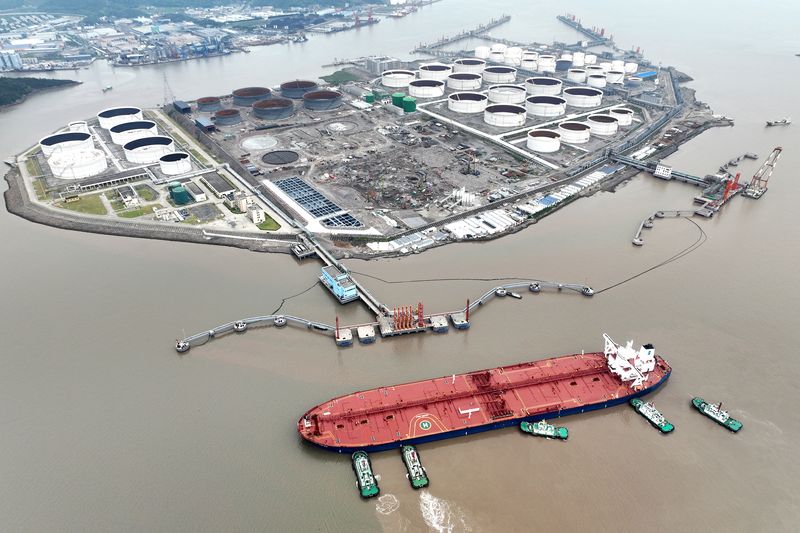
Source: Reuters
That compares with a 0.7-million barrel withdrawal forecast by analysts in a Reuters poll, a 2.3-million barrel decrease in the American Petroleum Institute (API) trade group’s survey, a 10.2-million barrel increase during the same week last year and a five-year (2018-2022) average increase of 0.4 million barrels for this time of year.
“This report is definitely more supportive than the (API) report that we saw yesterday,” said Phil Flynn, an analyst at Price Futures Group, referring to the “larger than expected drawdown in crude oil supplies” in the EIA report.
Brent futures rose 78 cents, or 1.1%, to $74.02 a barrel by 10:43 a.m. EST (1543 GMT), while U.S. West Texas Intermediate (WTI) crude rose 75 cents, or 1.1%, to $69.36.
On Tuesday, both Brent and WTI closed at their lowest since June 27.
Both Brent and WTI futures, however, were in contango through at least June. Analysts said that contango – with prices in later months higher than earlier months – was bearish because it can encourage marketers to buy oil at current prices and store it for sale in later months when prices are higher.
“Concerns around the global economy next year, a weak commitment to output cuts from OPEC+ and higher output elsewhere, including record levels in the United States, is weighing heavily on prices into year-end,” said Craig Erlam, senior market analyst UK & EMEA, at data and analytics firm OANDA.
In its latest monthly oil market report, OPEC blamed the latest crude price slide on “exaggerated concerns” about oil demand growth.
The group of oil producing nations kept its forecast for world oil demand growth unchanged for 2024 at 2.25 million barrels per day (bpd).
Later Wednesday, investors will be looking for the U.S. Federal Reserve’s (Fed) latest policy decision. After boosting interest rates to tackle soaring inflation several times since March 2022, the market widely expects the Fed to leave interest rates unchanged for a third straight time.
Higher interest rates boosts borrowing costs for consumers, which can slow economic growth and demand for oil.
Markets have priced in “aggressive rate cuts” for 2024, said Yeap Jun Rong, market strategist at financial markets trading firm IG International. “Any disappointment on that front could strengthen the U.S. dollar and weigh on the risk environment,” pushing down oil prices, Yeap said.
Elsewhere, nearly 200 nations reached an historic deal at the COP28 conference to begin reducing the global consumption of fossil fuels, meant to send a signal to investors in oil and other fossil fuels.
Saudi Arabia’s energy minister said he was in agreement with the COP28 presidency on the final deal, adding that it would not affect the Kingdom’s hydrocarbon exports.
In the Middle East, Israel said it will continue its war in Gaza whether or not it has international backing, after the United Nations passed a resolution calling for a ceasefire and U.S. President Joe Biden warned that Israel was starting to lose support because of civilian deaths.
(Reporting by Scott DiSavino in New York, Robert Harvey in London and Colleen Howe in Beijing; Editing by Elaine Hardcastle)

