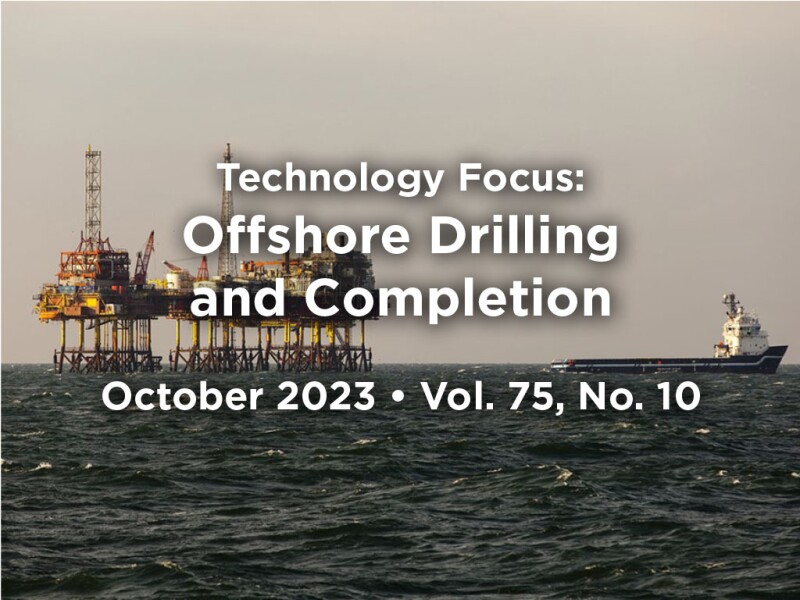
Optimizing and continually increasing efficiencies at every stage of the drilling and completion process are central themes in the papers showcased in this feature. Innovating our way through difficult times is what the oil and gas industry excels at, especially during challenging periods. During the COVID-19 pandemic, the offshore energy industry faced immense struggles with high upfront capital investment and long lead times in uncertain circumstances with extremely low oil prices.
The challenges brought about by the pandemic served as a backdrop to many of these innovations. Companies were compelled to discover creative solutions to maintain efficiency, reduce costs, and ensure safety during an era of unprecedented disruption.
Innovation in advanced analytics and machine-learning algorithms is used to optimize drilling-center locations, leading to cost reduction. This development became even more critical during the pandemic as companies aimed to maximize efficiency and minimize expenses. The execution of large-scale projects such as the Johan Sverdrup development highlights innovation in project management, enabling timely and cost-effective operations in a challenging environment. The emphasis on digital solutions and fiber-optic technology in Guyana’s offshore operations illustrates the industry’s adaptation to the pandemic by enabling remote operations and real‑time data collection while maintaining efficiency in a new discovery.
Innovations in riserless light well intervention systems are particularly relevant during the pandemic. These systems improved efficiency and safety for offshore interventions, enabling the industry to operate with minimal personnel onboard. The focus on well-planning strategies to overcome challenges in deep depleted reservoirs includes approaches that optimize drilling in complex conditions, which is crucial when efficiency is paramount. Retrofitting autonomous inflow control devices proved an effective approach in implementing state-of-the-art technology to improve reservoir sweep and productivity.
Moving forward, this innovative spirit in our industry as seen in these papers is a testament to our resilience during challenging times. In the coming years, this ability to sustainably increase recovery efficiencies to ensure energy security is crucial to shaping the future of energy production.
This Month’s Technical Papers
Machine-Learning Algorithms Optimize Drilling-Center Locations Offshore
Retrofitted Autonomous Inflow Control Devices Optimize Completions Design
Caspian Experience Boosts Performance in Turkey’s Onshore UGS Project
Recommended Additional Reading
SPE 212499 4D Radar Imaging of Wellbore Geometry While Drilling by Lars Øy, Well ID, et al.
OTC 30979 Guyana Operations and First Oil by Mike F. Ryan, ExxonMobil, et al.
SPE 212915 Enhancing Riserless Light Well Intervention Operability From Operator Perspective by Michael Long Ge, BP, et al.
SPE 214057 Challenges of Drilling Deep Wells in a Complex Overburden With Severe Depletion and Experiences From Caspian Sea by Anwar Juma Al Saadi, Dragon Oil, et al.
Swathika Jayakumar, SPE, is a technical manager with Core Laboratories. In this role, she leads a team of scientists and software program managers for the research and development of oilfield diagnostics chemicals and associated software. With 12 years of experience in the oil and gas industry, Jayakumar has partnered with clients worldwide to enhance hydrocarbon extraction efficiency using tracer diagnostics. She serves as an Executive Board member for the SPE Gulf Coast Section and on the SPE Annual Technical Conference and Exhibition Well Completions Committee. Jayakumar holds a master’s degree in petroleum engineering from Texas A&M University and is a candidate for an MBA degree at The University of Texas at Austin.