Equinor To Cut Renewables Investment by 50%, Boost Oil and Gas Output
Equinor will reduce investments in renewables over the next 2 years by 50% to $5 billion and will increase its focus on oil and gas production, expecting more than 10% growth from 2024 to 2027.
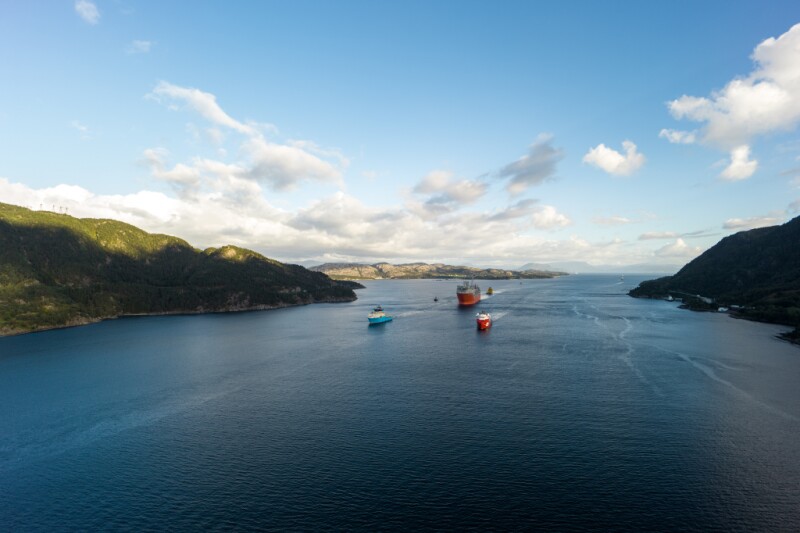
The Johan Castberg FPSO sail away in August 2024.
Source: Øyvind Gravås/Eirin Lillebø/Equinor
Equinor announced significant changes to its investment strategy, reducing investments in renewables over the next 2 years by 50% to $5 billion, down from approximately $10 billion.
It will also drop its target to spend half of its fixed assets budget on renewables and low-carbon products by 2030 “to adapt to market conditions and further strengthen value creation for shareholders” and “to underline that value creation is at the core of decision making,” according to a release of 4Q 2024 and full-year 2024 results on 4 February.
The company has lowered its expected capacity in renewables to 10–12 GW by 2030, down from its previous target of 12–16 GW.
Its focus on oil and gas production will increase, with expectations of more than 10% growth from 2024 to 2027, from 2 million BOED to 2.2 million BOED by 2030.
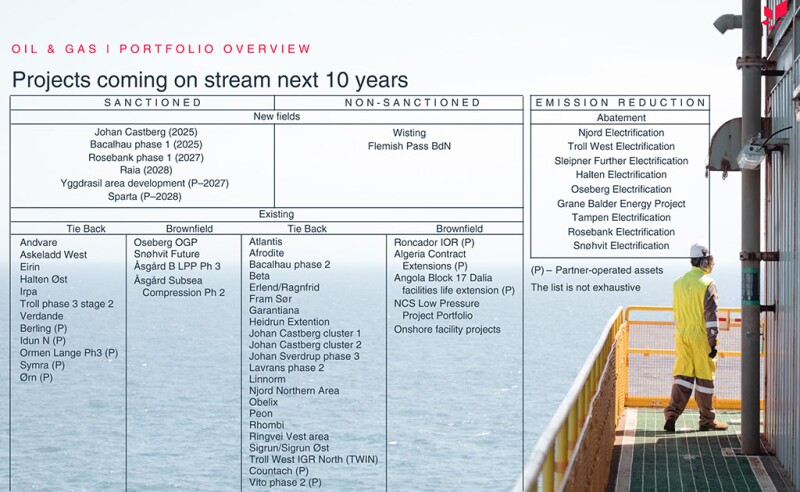
Production from the Norwegian Continental Shelf (NCS) is expected to maintain at a level of around 1.2 million BOED to 2035. Equinor will continue to develop existing fields on the NCS and its international projects.
“Driving increased recovery and exploration near infrastructure is expected to bring high-value volumes with short lead time, low cost, and low emissions,” the press release said.
Equinor Capital Markets Update 2025, February 2025.
Equinor CEO Anders Opedal said in the release, “Equinor is well positioned for further growth and competitive shareholder returns. We expect to deliver industry-leading return on average capital employed, above 15% all the way to 2030. Our oil and gas production outlook is increased to more than 10% growth from 2024 to 2027.
“We strengthen our expected free cash flow significantly compared to last year’s outlook. We do this by high-grading the portfolio, reducing the investment outlook for renewables and low-carbon solutions, and improving cost across our organization.”
Why the Shift in Strategy?
During the 4Q call on 5 February, Opedal said the company is facing three global trends affecting energy markets.
1. Global growth in energy demand. Global oil demand is expected to top 100 million B/D through this decade. Equinor expects natural gas demand to "increase and stay above today's level to 2050," he said. (The International Energy Agency reported that global gas demand reached approximately 4,200 Bcm in 2024.)
2. Geopolitical tension, tariffs, and increased uncertainty in commodity markets. "Oil demand is increasing with slow growth in Asia, and higher supply from non-OPEC countries add uncertainty to the price outlook."
3. Uneven pace of the energy transition. "It is moving fast in some markets, slow in most. Even the massive renewable growth is currently energy addition, not energy transition. In low-carbon solutions, different technologies are progressing at different pace.
"Carbon capture and storage (CCS) projects have many similar traits as oil and gas and our capabilities are in place. The regulatory frameworks are progressing, and customers are interested."
Although not explicitly mentioned, Equinor holds interests in both the Northern Endurance Partnership and the Net Zero Teesside Power CCS projects. The final investment decisions and financial closings for these projects were announced in December 2024.
Opedal said, "We are ready but we'll only execute if we get long-term commitment from our customers. We have excess storage capacity of 60 million tonnes of CO2 per year, adding 20 million last year and maintained our ambition."
Opedal added, "Different technologies move at a different pace. And particularly on hydrogen, we see that customers are coming later to the table to commit to long-term contracts."
He emphasized that reducing the company's own emissions "is our most important contribution to address climate change. We have an industry-leading low level of emissions from production and maintain our ambition of net 50% reduction by 2030. Continued effort to cut emissions while producing oil and gas reduces cost, increases returns, and increases the competitiveness.
"Our strategic direction remains the same. We continue to reduce emissions and build profitable business in renewables and low-carbon solutions towards our net-zero ambition."