Yahoo Finance
The abrupt resignation of BP chief Bernard Looney marks the loss of an executive who pushed for a transition to clean energy more aggressively than any of his industry peers, with mixed results. BP said Tuesday that the 53-year-old chief executive officer was departing after failing to fully disclose to the company board some of his past relationships with colleagues.
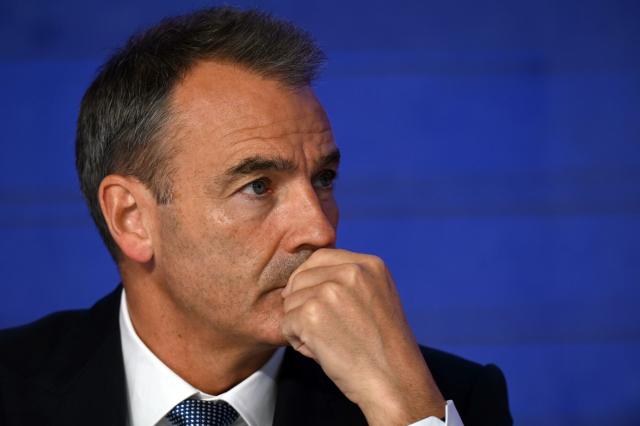
Source: Reuters
Chief Financial Officer Murray Auchincloss will take the top job on an interim basis.
Looney’s exit caps a tumultuous three years leading BP in its most radical strategy shift since John Browne transformed the company into a transatlantic giant by buying US rivals Amoco and Atlantic Richfield Co. more than two decades earlier. From the North Sea to West Texas, Looney pushed BP into greener territory, with big bets on hydrogen and offshore wind. Without the architect of that pivot, the company’s direction is now in question.
The change at the top of BP is “definitely a big surprise,” Edward Jones analyst Faisal Hersi said in an interview. A change of strategy back to more fossil fuels “would be positive. The pace of BP’s energy transition was just too ambitious.”
Shares of the company fell 1.26% to 516.2 pence as of 8:03 a.m. in London.
In 2020, just a week into the top job, Looney announced BP would embark on an ambitious net zero path to help fight climate change. It was a bold shift, not only because the company was at the time considered a climate laggard, but also because Browne’s previous attempt to re-brand BP as “Beyond Petroleum” in the early 2000s ended mostly in writedowns.
Investors were lukewarm over Looney’s approach. The firm’s valuation dipped below $50 billion as the coronavirus pandemic crushed revenue and the company slashed its dividend. Russia’s invasion of Ukraine brought forth another crisis, forcing BP to write off more than $25 billion tied to its 20% stake in Rosneft PJSC.
“It clearly has been a rocky road,” Bobby Tudor, a Houston-based banker who helped finance the US shale revolution, said in an interview.
But the war also gave Looney a reprieve. Oil prices soared as Russia’s invasion upended global markets, lifting profits at BP and other supermajors to record levels. Looney also rowed back on some of BP’s green commitments, saying it would cut oil and gas output more slowly than previously promised.
“There was a lot to like,” said Bill Fitzpatrick, who helps manage $2.3 billion including BP shares at Newtown Square, Pennsylvania-based Logan Capital Management. “He managed the company in a very shareholder-friendly manner, had a deep commitment to clean energy, strong emphasis on capital allocation.”
The son of an Irish dairy farmer, Looney joined BP as a drilling engineer fresh out of university in 1991. He was the first in his family to graduate from college. Neither of his parents attended school beyond the age of 11. In conference calls throughout the pandemic, a small model tractor was visible on a shelf in the background, a nod to his agrarian roots.
Looney rose up the ranks of the company, taking jobs in Alaska, the Gulf of Mexico and eventually becoming a member of an elite group of executives known as the “turtles” under former CEO Browne. They took their name from Teenage Mutant Ninja Turtles, a cartoon series about four human-like turtles, experts in martial arts who would spring into action to fight evil whenever needed.
Looney’s predecessors after Browne stepped down in 2007 — Tony Hayward and Bob Dudley — were both drawn from the group. Looney is the last of the turtles, leaving BP with a very different pool of executives from which to choose its next leader, should it look internally — the company hasn’t hired a CEO from outside its ranks in recent history.
Looney’s style was a stark contrast from his more restrained predecessor. Dudley, an American, feared Big Oil was moving too fast into green technologies. In contrast, Looney often took to Instagram to post messages and videos about issues ranging from the LGBTQ+ community to the candy for sale at BP gas stations. He championed mental health issues, donating 20% of his salary to UK charity Mind in the depths of the pandemic and tipped the gender balance in his leadership team in the favor of women.
BP had initially found no breaches of the company’s code of conduct when the board reviewed allegations tied to Looney’s past personal relationships with colleagues in 2022, according to a statement Tuesday. But more allegations surfaced recently, and Looney informed the company that he hadn’t been fully transparent with the previous investigation, BP said.
“Once a CEO lies to the board, there is a loss of confidence,” said Joe Grundfest, a former commissioner with the US Securities and Exchange Commission and now professor emeritus at Stanford Law School. “And the CEO’s shelf life is short.”
–With assistance from Kevin Crowley and David Wethe.

