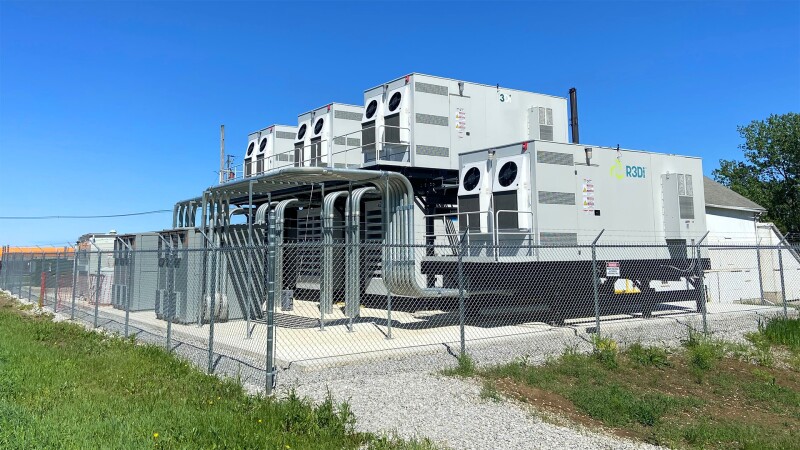
Global drilling contractor Nabors Industries announced this week a new decarbonization initiative in partnership with e2Companies, a California-based developer of microgrid systems.
Under the multimillion-dollar agreement, Nabors will purchase e2Companies’ mobile power utility stations to energize its drilling operations. The two firms also plan to jointly develop an energy storage business to expand beyond the initial oilfield applications and into concentrated solar farms and geothermal energy.
But the big focus for Houston-based Nabors is to capitalize on the industrywide push to reduce emissions and operational costs by replacing diesel-powered equipment with electrified alternatives.
This shift, however, brings new complexities, including the need for reliable on-site power generation in remote areas where grid access is limited or nonexistent.
To solve this challenge the new collaboration will deploy e2Companies’ “virtual utility system,” which the company says, “delivers uninterruptible, on-site power generation combined with energy storage and grid optimization services.”
Designed as a self-contained solution, the microgrid system integrates natural gas-fired generators with lithium iron phosphate batteries engineered for a 20-year life cycle. These components are housed inside shipping-container-sized enclosures, making them transportable and modular.
e2Companies adds that its mobile utility system avoids about 40,000 tons of CO2 emissions per MW over its lifetime compared with conventional power systems.
“Electrification is a key enabler to reducing emissions,” said Anthony Petrello, CEO of Nabors, in a statement. “Our view is the industry needs to take a more holistic approach—considering the entire life cycle from drilling and completions through production—to design electrification strategies that maximize efficiency and sustainability.”
In the initial phase of the partnership, e2Companies will install power meters on selected drilling rigs in the Permian Basin and Bakken Formation. The company will measure the power requirements of the sites and design the modular units needed to power the assets.
Nabors said that it has already outfitted 20 of its rigs in Texas, North Dakota, and Argentina to run on highline power, making them grid- and microgrid- compatible.
“This strategic collaboration with Nabors will accelerate the deployment of our innovative on-site power systems in new industry verticals and advance our mission to design and deploy solutions that deliver automated grid stability for our customers,” James Richmond, CEO and founder of e2Companies, said in the announcement.
Nabors and e2Companies cited figures showing that oil and gas operational emissions contribute an estimated 15% of global energy-derived emissions. At the same time, the global oil and gas electrification market is projected to become a $23-billion industry within the next 5 years while the microgrid is expected to become a nearly $88-billion business by 2029.
Both companies also emphasized microgrids as a compelling solution to the oil and gas industry’s challenge of balancing “competing demands” from the rapidly increasing power needs of artificial intelligence data centers and the broader push toward industrial electrification.