Nasdaq
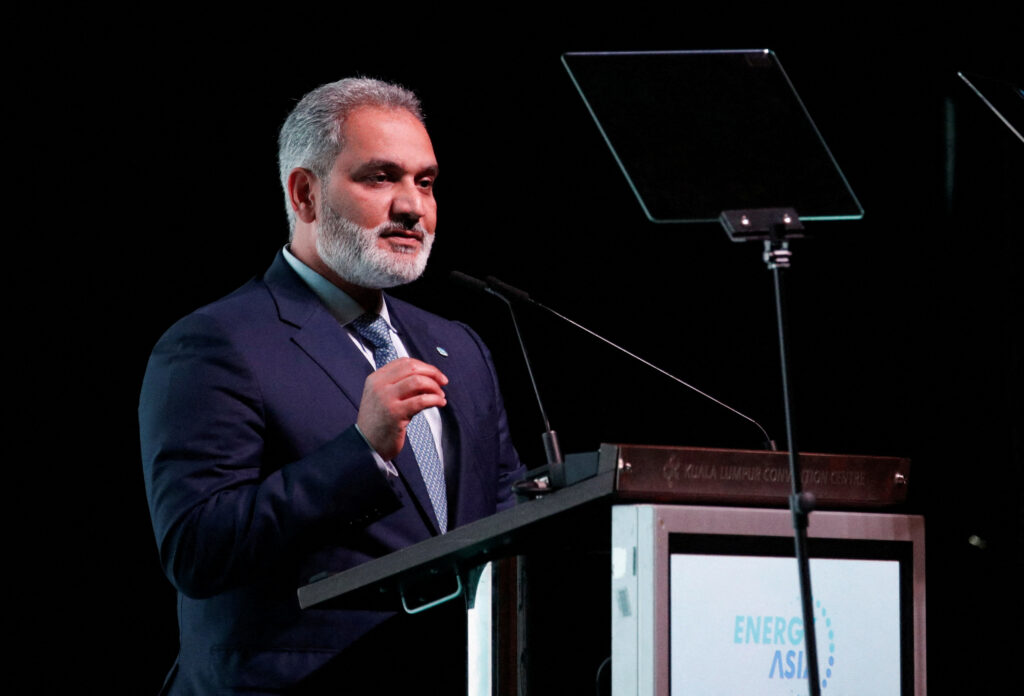
DUBAI – OPEC Secretary General Haitham Al Ghais on Monday accused the International Energy Agency (IEA) of vilifying the oil and gas industry, in the latest clash between the groups over climate policy.
Source: Reuters
Al Ghais was referring to a note published by the West’s energy watchdog on Thursday that said the fossil fuel industry was facing a “moment of truth” where producers had to choose between deepening the climate crisis or shifting to clean energy.
“This presents an extremely narrow framing of challenges before us, and perhaps expediently plays down such issues as energy security, energy access and energy affordability,” Al Ghais said in a statement.
“It also unjustly vilifies the industry as being behind he climate crisis.”
The Organization of the Petroleum-Exporting Countries (OPEC) and the Paris-based IEA have repeatedly clashed in recent years over issues such as long-term oil demand prospects and investment in new hydrocarbon supplies.
The latest fall-out comes as the United Arab Emirates (UAE), a major OPEC producer, prepares to host the COP28 U.N. climate summit at the end of the week.
Al Ghais has said OPEC would be present at the climate talks.
The IEA sees world fossil fuel demand peaking by 2030 as more electric cars hit the road and China’s economy grows more slowly while shifting towards cleaner energy.
OPEC, de facto led by top oil exporter Saudi Arabia, disagrees with the prediction.
It has described such projections as “dangerous”, saying they are often accompanied by calls to stop new oil and gas investments which would then jeopardise energy security.
In Thursday’s note, the IEA was also critical of carbon capture technologies.
“The industry needs to commit to genuinely helping the world meet its energy needs and climate goals – which means letting go of the illusion that implausibly large amounts of carbon capture are the solution,” the IEA statement published on its website said.
The UAE, the second Arab country to host the climate summit after Egypt in 2022, has alongside other Gulf energy producers called for what they consider a more realistic energy transition in which fossil fuels would keep a role in securing energy supplies while industries decarbonise.
Al Ghais said it was regrettable the IEA called technologies such as carbon capture utilization and storage (CCUS) an “illusion”, as they were seen in U.N. Intergovernmental Panel on Climate Change reports as part of the solution.
“The truth that needs to be spoken is simple and clear to those who wish to see it. It is that the energy challenges before us are enormous and complex and cannot be limited to one binary question,” Al Ghais said.
OPEC+, which groups OPEC and allies such as Russia, decided last year it would stop using data from the IEA when assessing the state of the oil market.
Saudi Arabia has also blamed the IEA – and its initial prediction for a 3 million barrel per day (bpd) fall in Russian production on the back of the war in Ukraine – for Washington’s decision to sell oil from its reserves.

