BOE Report
Most of us heard last month that a federal committee had invited Suncor CEO Rich Kruger to speak after his August 15th statements that Suncor should return to its oil production roots and focus on “the fundamentals” of safety, operational integrity, reliability and profitability over energy transition.
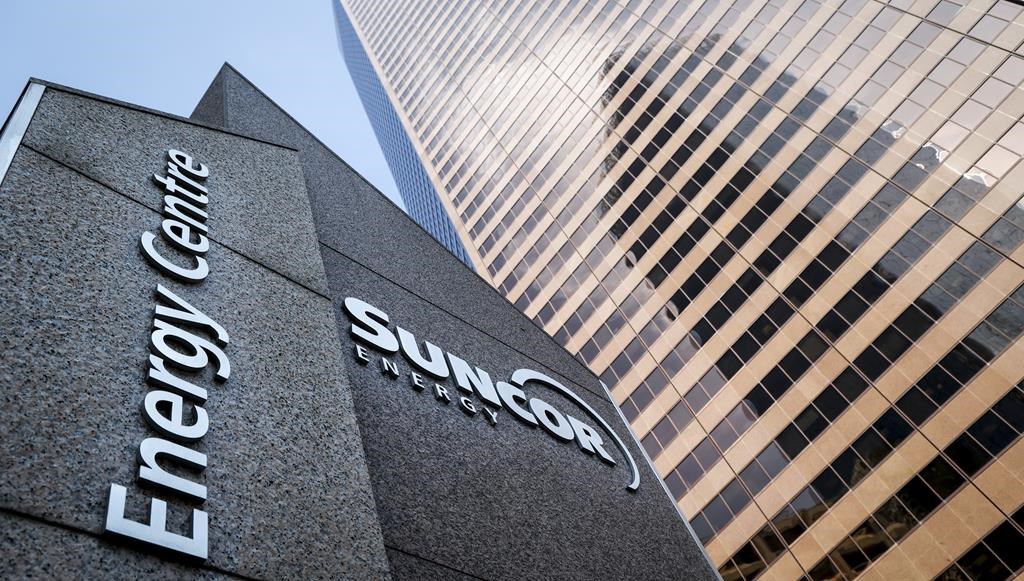
Source: Reuters
Kruger was quoted in various media (including the Globe and Mail) from an August 14th earnings call as saying Suncor had been neglecting “the business drivers of today” in pursuit of clean, low-carbon energy pursuits, with a “disproportionate emphasis on the longer-term energy transition.” At least one media outlet made the erroneous claim it was a statement that “the company will focus on its oilsands operations to pad the pockets of shareholders.”
Unfortunately, Kruger’s message of a commonsense return to a balance of decarbonization initiatives with business sustainability measures became misconstrued to be an abandonment of clean energy goals entirely… or so it seems, from some of the questions posed in the Standing Committee on Natural Resources meeting this week on Monday.
The meeting was titled “Climate Crisis and Canada’s Energy Sector” and the Committee motion to meet used language that betrayed a biased interpretation of Mr. Kruger’s statements by proposing to ask him to explain:
“Why he believes that the only ‘urgency’ facing the oil sector is to make as much money as possible while increasing production and abandoning their responsibility to help meet Canada’s international climate commitments… given the urgency of the climate crisis.” (a direct quote from the motion)
It seemed quite odd that the committee would be so presumptuous as to profess to know what a senior executive “believes” as well as make an unfounded accusation that the company was “abandoning their responsibility”.
Both Rich Kruger, Suncor’s president and chief executive officer and Arlene Strom, Suncor’s chief sustainability officer attended the committee. In his opening statement, Kruger gave a sane and sober summary of the issues facing not only Suncor and the Canadian energy industry but also facing the oil and gas industry in countries around the globe. Many of his talking points about energy and current global forces were similar to those expressed by the international heads of state and ministers who attended the World Petroleum Congress WPC 2023 just a few weeks ago in Calgary. He added some key insights into the value of producing all Canadian energy resources.
In his address to the committee, Kruger conveyed not only how Suncor sees the global energy future and the role of oil and natural gas resources in Canada can play, but he also detailed specific actions Suncor is currently taking to tackle the challenge of meeting the world’s energy needs while addressing greenhouse gas emissions and climate change. He acknowledged the global economic and social forces affecting human development.
“Our world is rapidly changing,” Kruger said. “Global population is increasing, economies are growing, energy security is threatened by regional conflict. Climate change is occurring, and energy demand continues to rise.”
He noted that affordable and reliable energy is critical to human development – for quality of life, life expectancy, education, and income. He pointed out how energy use and human development are inextricably linked and that where there is a lack of energy there is a lower quality of life.
“Today, we see rising greenhouse gas emissions, the warming of our planet, and increasingly the concerning effects of climate change,” Kruger acknowledged. “Yet all plausible global energy outlooks forecast oil and gas remaining among the world’s largest sources of energy for decades to come, valued for its reliability and versatility. Therein lies the dilemma of effectively and affordably decarbonizing the oil and gas sector, not eliminating it.”
The message that oil demand will remain and not decline as predicted by the IEA aligns with statements Amin Nasser, the president and CEO of Aramco, Saudi Arabia’s state-owned oil and gas company, made recently at the World Petroleum Congress 2023 on September 17th in Calgary. Nasser rebutted the IEA’s predictions that “a peak in global oil demand in sight before the end of this decade”. Instead, Nasser’s statements aligned with global energy outlooks for oil demand persisting and he even had perspective on coal demand.
“The reality on the ground is that despite a concerted effort to move to alternatives, global coal consumption is at record levels … with demand still robust,” Nasser said. He asserted that oil consumption remains strong while natural gas is becoming increasingly important as a bridge fuel as reported by the CBC. Just yesterday Nasser also stated to the media that this year’s COP28 UN climate conference should focus on cutting emissions from hydrocarbons, not on reducing production.
For many who have direct exposure working in the oil and gas industry, the realities of the persistence and pervasiveness of hydrocarbons in global economies seem self-evident. However, it became evident during the question period just how profoundly the Members of Parliament from various political parties misunderstood Rich Kruger’s messaging. Certain segments of the committee discussion were demonstrative of the level of challenge in communicating positive messaging about oil and gas to listeners in the committee as well as to the public in general.
Kruger emphasized in his opening statement that Suncor is committed to the energy transition and that low-carbon Canadian oil and gas can benefit the world, but he added a caveat.
“Achieving Canada’s energy potential requires a shared vision, including public policy support, technological advances, competitive investments and effective leadership,” Kruger said. “In other words, a collective effort is required between government, industry, and society. Suncor is committed to this effort, being part of the solution by helping to decarbonize Canada’s oil and gas sector today, in being part of the energy transition tomorrow.”
He stated that Suncor has taken tangible and financially material actions to decarbonize their existing hydrocarbon businesses today.
“By investing in low carbon fuels, switching to cogeneration capacity at oilsands mining sites, by piloting low carbon injecting technologies for in situ operations, by installing electric vehicle charging facilities at Petro-Canada stations coast to coast, by advancing sustainable aviation fuels, and by operating Canada’s largest ethanol plant to produce renewable transportation fuels.”
He also mentioned Suncor’s work with the five other companies in the Pathways Alliance “to pursue large scale carbon capture and sequestration, supporting our objective of net zero greenhouse gas emissions from our operations by 2050. The Alliance involves unprecedented collaboration between industry and multiple levels of government, federal and provincial, in terms of the transition to net zero via non-oil and gas opportunities.”
In the question period that followed, some of the early challenging questions came from an MP from BC who thought the company was “doubling down” on oil and gas to which Kruger replied that oil and gas, being a depletable resource, naturally declines and ongoing investment is required to continue producing supply at today’s level of production (having already established that global oil demand is increasing). Kruger also confirmed that renewables have a huge role in their business and that the company will be “picking the things they are best at.”
The MP then questioned the oil and gas sector’s “massive profits” and asked if they will be used to get to net zero by 2050 and whether Suncor was still committed to the energy transition by 2050. He seemed to have missed Kruger’s earlier comments made just minutes before the MP’s question that the company is committed to the 2050 target which Kruger then restated to answer the MP’s question.
In answer to the question of the “massive profits” Kruger gave this perspective.
“I’ll give you a few numbers to tie in. Over the last three years, we’ve made in total $9 billion in profits. Over three years we’ve paid $10 billion in income taxes and royalties to the federal and provincial governments to build bridges, hospitals and schools. We’ve invested, over those same three years, $13 billion (more than we’ve made) some of it to maintain the health and well-being of our existing businesses, for safety and operational integrity and environmental responsibility. And an increasing share of it is going to new businesses. Last year we spent $540 million on decarbonization of projects. So, I think we are an industry and a company where the numbers are big. But when you break them down and you look- we pay more than 50% of what we make every year (and proud to do it) in taxes and royalties. And we’re investing back not only to maintain our existing business but to create those new businesses that I think we would agree are important to the country.”
However, the next MP’s questions demonstrated that there was a very significant lack of understanding of some of the most basic principles expressed by Mr. Kruger in the committee meeting. An MP from Quebec needed clarification of the difference between compliance with the Clean Fuel Regulations (CFR) and strategies to manage costs within the companies’ operations including CCUS costs. He referred to $24 billion in CCUS investment that he understood Pathways Alliance has said is the cost of decarbonization, asking if this cost is going to be passed on to consumers, casting doubt on the Alliance’s strategy. Ultimately, he asked if oil produced with a carbon capture strategy will be more expensive than oil produced without.
Kruger clarified by saying:
“It depends. CCUS is one component of cost. So when you look at whether it’s more costly or not, it depends on all of the other components of cost and that’s what we look at. What can we do to offset increasing costs? Can we bring greater efficiency and greater productivity or new technology into it? The answer is ‘It depends’ because does it add a cost? Absolutely. Can the cost be offset to maintain global competitiveness? That’s the question.”
An MP from Ontario asked how much responsibility the oil and gas industry is ready to take for the wildfires and damage due to climate change. He referred to Exxon’s research report from three decades ago on climate change and tried to obtain statements from Kruger about Exxon and the oil and gas industry’s legal liability for climate change. After being politely told that the questions would be better posed to that company in particular, the MP quoted from an erroneous Greenpeace report that Suncor had dropped “liabilities” from their reports.
“You’re referencing a Greenpeace complaint put in front of the Alberta Securities Commission that is inaccurate,” Kruger clarified. “They are still contained within the report. We had all of the obligatory liabilities and risks reported. This was a voluntary report, and it happens to be in a different area that apparently wasn’t read.”
I could continue and list many more examples of what seemed to be a willful misunderstanding by the committee members that were questioning Rich Kruger but instead, I would like to invite you to follow this link and view the video recording of the committee meeting: https://www.ourcommons.ca/Committees/en/Meetings?meetingDate=2023-10-16
You will find that with every confused question or misunderstanding or attempt to misconstrue the meaning of statements or implicate, Rich Kruger responded with balanced and calm information that helped dispel myths, clarify misunderstandings and fully inform the natural resources committee.
Mr. Kruger delivered a master class in effective communication that should be studied by as many members of the oil and gas industry as possible.
This is because we are in an era of intense and multilayered government and societal scrutiny of all aspects of energy company operations. There will be many more committee meetings like the “Climate Crisis and Canada’s Energy Sector” meeting of the Standing Committee on Natural Resources or the Environment and Sustainable Development Committee etc. etc.
Certainly, we are seeing signals from Ottawa that they will continue to apply pressure to amend the Impact Assessment Act and leverage the Canadian Environmental Assessment Act to advance measures affecting the oil and gas industry, including the plan to cap greenhouse gas emissions from the oil and gas sector and the proposed Clean Electricity Regulations to restrict emissions from power generation which Environment Minister Steven Guilbeault says will not be significantly affected by the Supreme Court’s finding that the 2019 Impact Assessment Act violates provincial jurisdiction.
“The opinion of the court does not call into question other regulatory initiatives under development, and we are confident that they are within the purview of the federal government,” Guilbeault said in a recent statement provided to the Globe and Mail.
There will be more committees and hearings and industry members would do well by studying Rich Kruger’s presentation to the Standing Committee on Natural Resources dated Oct 16, 2023.
You may especially enjoy the segment at the end of the meeting when he debunks the rumors that Suncor “fired” their chief sustainability officer and he indicates that CSO Arlene Strom is still employed and sitting right beside him at the table.
Maureen McCall is an energy professional who writes on issues affecting the energy industry.

