准确评估凝胶强度对于优化钻井作业和防止岩屑沉降在井底至关重要。传统方法依赖于旋转粘度计,这种方法耗时、依赖设备,并且缺乏实时监控能力。这项研究强调了利用机器学习 (ML) 作为预测钻井液凝胶强度的实用工具的可行性,提供实时监控和精确预测,以提高钻井效率、安全性和自动化计划。
背景
钻井液的凝胶强度使用粘度计进行评估,重点关注以 600 转/分钟的速度搅拌流体以破坏任何凝胶形成后获得的 3 转/分钟读数。最初,当泥浆达到静态 10 秒时进行测量。
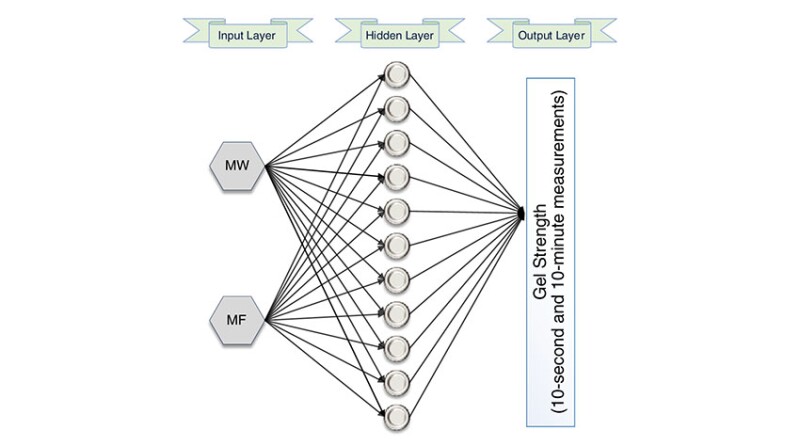
准确评估凝胶强度对于优化钻井作业和防止岩屑沉降在井底至关重要。传统方法依赖于旋转粘度计,这种方法耗时、依赖设备,并且缺乏实时监控能力。这项研究强调了利用机器学习 (ML) 作为预测钻井液凝胶强度的实用工具的可行性,提供实时监控和精确预测,以提高钻井效率、安全性和自动化计划。
钻井液的凝胶强度使用粘度计进行评估,重点关注以 600 转/分钟的速度搅拌流体以破坏任何凝胶形成后获得的 3 转/分钟读数。最初,当泥浆达到静态 10 秒时进行测量。
Accurately estimating gel strength is paramount for optimizing drilling operations and preventing cuttings from settling at the wellbore’s bottom. Traditional methods rely on rotational viscometers, which are time-intensive, equipment-dependent, and lack real-time monitoring capabilities. This study underscores the feasibility of leveraging machine learning (ML) as a practical tool for predicting drilling-fluid gel strength, offering real-time monitoring and precise predictions to enhance drilling efficiency, safety, and automation initiatives.
The gel strength of drilling fluid is assessed using a viscometer, focusing on the 3-rev/min reading obtained after agitating the fluid at 600 rev/min to disrupt any gel formation. Initially, the measurement is taken when the mud reaches a static state for 10 seconds.