Nasdaq
LONDON – A war between Islamist group Hamas and Israel poses one of the most significant geopolitical risks to oil markets since Russia’s invasion of Ukraine last year. While oil flows have not yet been affected, analysts and market observers point to two major implications if the conflict escalates.
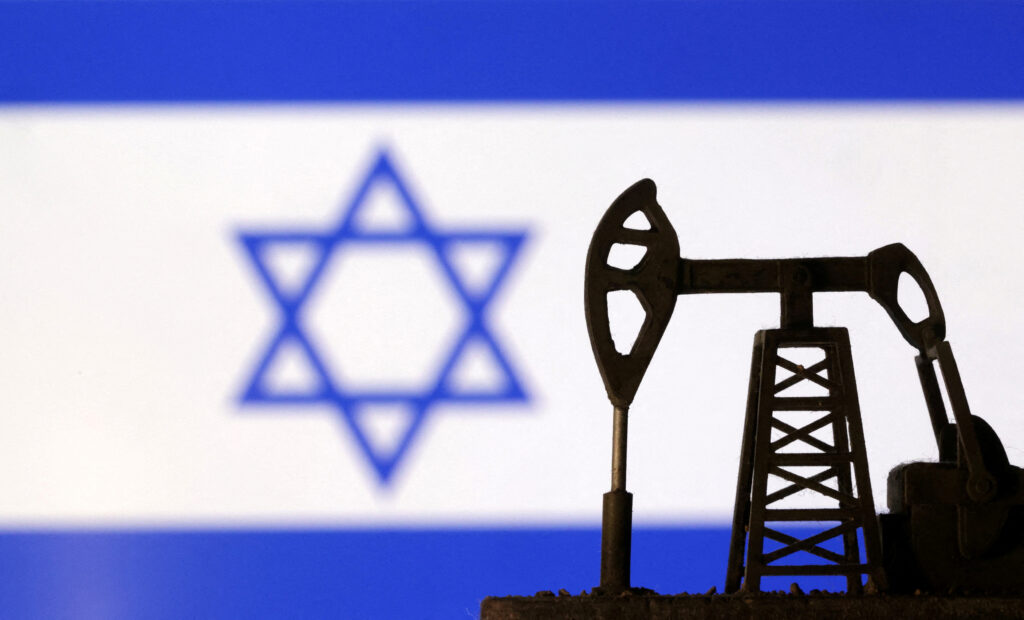
Source: Reuters
First, the U.S. could tighten or step up enforcement of sanctions on Iran should it be implicated in Hamas’ attack on Israel, which could further strain an already undersupplied oil market.
Second, a deal being brokered by Washington to between Saudi Arabia and Israel, which could see the kingdom increase oil output, could be derailed.
HOW HAS THE OIL MARKET REACTED SO FAR?
Brent crude LCOc1 jumped by about $3.50 to touch $89 a barrel on Monday, the first trading day after Hamas launched a surprise attack on Israel on Oct. 7.
It subsequently reversed most of those gains before rising to above $88 a barrel on Friday as the United States imposed sanctions on shippers carrying Russian oil in contravention of a G-7 imposed price cap.
Analysts and industry insiders, who had expected a stronger rally, acknowledged that the situation differed from the 1973 oil crisis when Saudi Arabia spearheaded an embargo targeted at nations that had supported Israel during the Yom Kippur War, causing prices to skyrocket.
Saudi Arabia and Russia have already announced voluntary supply cuts until the end of 2023, pushing oil prices to 10-month highs in late September before macroeconomic concerns pulled them dramatically lower again last week.
The International Energy Agency said on Thursday the conflict had not had a direct impact on oil supplies, while David Goldwyn, a former special envoy for international energy affairs at the U.S. State Department, said fundamentals would remain a bigger driver of prices.
Rob Thummel, senior portfolio manger at Tortoise Capital, said oil prices would be unlikely to rise substantially unless there is disruption in the Strait of Hormuz, the world’s most important oil artery carrying a fifth of global supply, caused by Iran or any other country.
WHAT DOES THE CONFLICT MEAN FOR IRANIAN EXPORTS?
Despite U.S. sanctions, Iranian crude exports have grown significantly this year, offsetting some of Riyadh and Moscow’s 1.3 million barrel per day (bpd) voluntary cut.
Hamas backer Iran has denied any involvement in the group’s attack on Israel. U.S. Treasury Secretary Janet Yellen on Wednesday said she had yet on whether the United States would impose new sanctions on Iran if evidence emerged that the country was involved in the attack.
“This is something that we have been constantly looking at, and using information that becomes available to tighten sanctions,” she said.
Tighter U.S. sanctions on Tehran would threaten crude supplies and push up energy prices both globally and domestically, something President Biden will be keen to avoid ahead of a 2024 election.
But RBC Capital Markets analyst Helima Croft said it would “likely be difficult” for the Biden administration to continue with its “permissive sanctions regime” that has allowed Iran’s oil production to approach pre-2018 levels.
Other analysts don’t expect the U.S. to risk supply disruptions, however.
“Given that policy objectives did not target Russian oil flows even at the height of the Russia-Ukraine conflict, we do not expect Iranian oil exports to be constrained either,” Macquarie analysts said.
FGE analysts said that the U.S. was unlikely to tighten sanctions without Saudi Arabia agreeing to replace lost Iranian barrels, which they added that they did not see happening.
WHAT BECOMES OF THE SAUDI-ISRAELI DEAL?
The U.S. is attempting to broker a rapprochement between Saudi Arabia and Israel, in which the kingdom would normalise ties with Israel in return for a defence deal with Washington.
Saudi Arabia told the White House it is willing to boost oil production early next year to help secure the deal, the Wall Street Journal reported last week.
Washington has said the efforts should continue but Ben Cahill of U.S.-based think tank Center for Strategic and International Studies said the talks could now be suspended, closing off an important avenue of U.S.-Saudi cooperation.
HOW HAS OPEC+ REACTED?
Saudi Arabia’s energy minister Prince Abdulaziz told CNBC “the cohesion of OPEC+ should not be challenged”.
“We’ve been through the worst, I don’t think we will have to go through any terrible situation at all,” he said.
Iraq’s oil ministry spokesman on Oct. 12 said that OPEC+, the Organization of the Petroleum Exporting Countries and allies led by Russia, does not make knee-jerk reactions to market challenges.
Russian Deputy Prime Minister Alexander Novak added on Thursday that current oil prices factored in the conflict and reflected the market’s belief that risks posed by the clashes were not that high.
Russia and Saudi Arabia met in Moscow on Wednesday, when Russian president Vladimir Putin said OPEC+ coordination will continue “for the predictability of the oil market”.
(Reporting by Natalie Grover and Ahmad Ghaddar in London; additional reporting by Alex Lawler in London and Laura Sanicola in New York; Editing by Kirsten Donovan)

